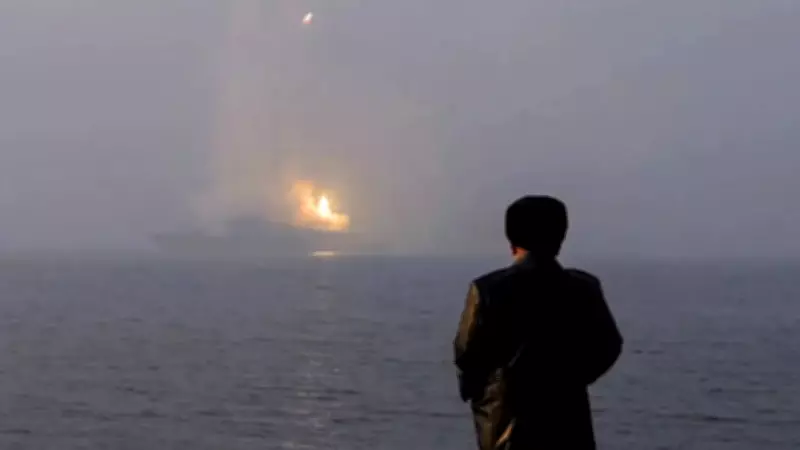
North Korea's 'Devil's Weapon' Test: A New Era of Military Escalation
In a bold and alarming move, North Korea has conducted a series of weapons tests, including the launch of a short-range ballistic missile equipped with a cluster bomb warhead. This development, described by experts as a "devil's weapon," marks a significant escalation in Pyongyang's military capabilities and raises profound concerns about the potential for civilian casualties in any future conflict. The tests, carried out between April 6 and 8, 2026, signal North Korea's intensified focus on enhancing battlefield lethality and area-denial strategies, challenging global security norms.
Details of the Missile Test and Its Implications
According to the Korean Central News Agency (KCNA), North Korea tested a Hwasong-11ga missile, also known as the KN-23, fitted with a cluster munition warhead. This missile is designed to release dozens to hundreds of smaller submunitions mid-air, dispersing them across a wide target area. The capability to cover such extensive zones—reportedly up to 10 football fields—underscores the weapon's destructive potential and its role in North Korea's evolving arsenal. This test highlights Pyongyang's commitment to advancing its military technology, despite international sanctions and diplomatic pressures.
Why Cluster Bombs Are Called the 'Devil's Weapon'
Cluster munitions have earned the grim nickname "devil's weapon" due to their indiscriminate and long-lasting dangers. Unlike precision-guided missiles that target specific military objectives, cluster bombs scatter submunitions over large areas, making no distinction between combatants and civilians. This characteristic increases the risk of mass civilian casualties in conflict zones. Moreover, many of these submunitions fail to explode on impact, leaving behind unexploded ordnance that poses deadly threats to communities for years, even decades, after conflicts end. The humanitarian impact of such weapons has led to widespread condemnation and calls for bans under international treaties.

Global Reactions and Security Concerns
The recent test has sparked fresh concerns among global security analysts and neighboring countries. North Korea's focus on cluster bomb technology suggests a shift towards more aggressive battlefield tactics, potentially destabilizing the Korean Peninsula and beyond. This development comes amid ongoing tensions in the region, with Pyongyang continuing to defy United Nations resolutions aimed at curbing its missile programs. The international community is closely monitoring the situation, as such advancements could prompt increased military preparedness and diplomatic efforts to address the growing threat.
Historical Context and Future Outlook
North Korea has a long history of missile tests, but the integration of cluster munitions represents a new level of sophistication in its weapons development. This move aligns with Pyongyang's broader strategy to bolster its deterrent capabilities and negotiate from a position of strength. Looking ahead, experts warn that further tests or deployments of such weapons could exacerbate regional instability and complicate peace talks. The world watches as North Korea continues to push the boundaries of military innovation, with the "devil's weapon" serving as a stark reminder of the urgent need for robust arms control and conflict prevention measures.