

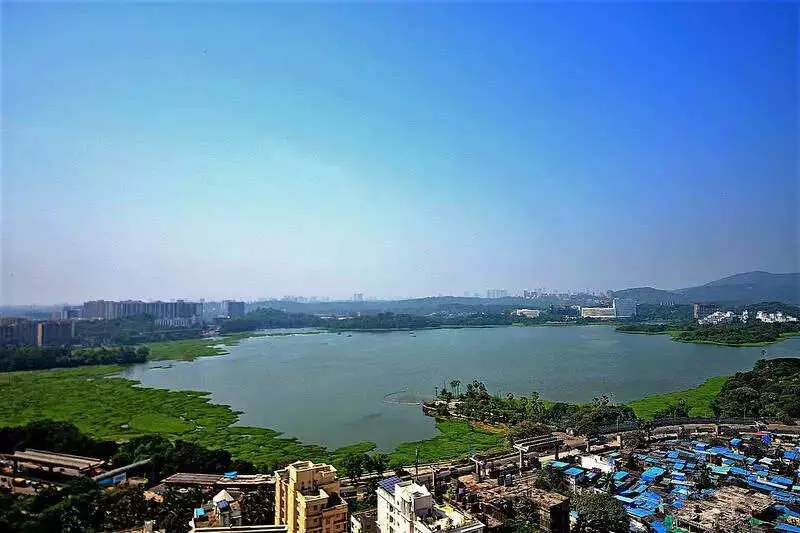
A high-powered committee appointed by the National Green Tribunal (NGT) has put forward a stringent recommendation to hold the Brihanmumbai Municipal Corporation (BMC) financially accountable for the ongoing pollution of Powai Lake. The joint committee has suggested imposing a penalty of Rs 5 lakh per month for each inlet that continues to discharge untreated sewage into the iconic water body, if the BMC fails to adhere to a new corrective action plan.
The Core of the Conflict: A Lake Choking on Sewage
The issue reached the NGT afresh in March 2025 through a letter-petition filed by Powai resident Dr. Rakesh Bakshi, highlighting the deteriorating condition of the lake. The tribunal's principal bench took suo motu cognisance, formed a joint committee, and moved the case to its western zone bench in Pune. This committee comprised representatives from the Central Pollution Control Board (CPCB), the Maharashtra Pollution Control Board (MPCB), and the Maharashtra State Wetland Authority.
The report reveals a grim reality: Powai Lake continues to receive approximately 18 million litres per day (MLD) of untreated sewage through 19 culverts and two major drains. This is despite directions issued by the MPCB to the BMC back in 2021 to divert this sewage to treatment plants. The 210-hectare wetland, which is listed in the National Wetland Inventory and has been ground-truthed, remains under severe threat.

Recommended Penalty and BMC's Proposed Measures
The committee's key recommendation is a financial deterrent. It has asked the NGT to order compensation of Rs 5 lakh per month per inlet, applicable retrospectively from February 2020, for any continuing discharge of untreated sewage. This penalty is intended to ensure compliance where previous directives have failed.
In response, the BMC has outlined a multi-pronged strategy to tackle the crisis. Its long-term plan includes:
- Laying new sewer lines to capture flows.
- Installing interceptors to collect sewage before it enters the lake.
- Setting up an 8 MLD sewage treatment plant (STP) at the abandoned Powai pumping station.
- Diverting other inflows to the existing Bhandup and Mithi river treatment plants.
However, the committee noted that ground-level work for these long-term projects has not yet begun, with the tender process still underway.
Short-Term and Scientific Restoration Plans
Recognizing the delay in infrastructure, the committee advised immediate short-term and medium-term actions. It recommended that the BMC start in-situ treatment at all sewage entry points using microbial dosing and drain-based pollution reduction systems until permanent solutions are operational.
Other suggested measures include:
- Removal of water hyacinth and deployment of aerators.
- Installation of real-time dissolved oxygen monitors.
- Desilting of the lakebed once sewage diversion is achieved.
- Strengthening aeration along the shoreline.
- Undertaking scientific restoration in consultation with research institutions after pollution sources are controlled.
The report was formally submitted by Nishchal C (CPCB), Rakesh Dafade (MPCB), and Dr. Y B Sontakke (Maharashtra State Wetland Authority). Meanwhile, parallel advocacy efforts to save the lake have been mounted by the NatConnect Foundation and the BMC's own advanced local management (ALM) committee. NatConnect has even escalated the matter to the Prime Minister's Office, seeking Ramsar site status for Powai Lake.
NGT's Response and Next Steps
During the proceedings, the NGT bench comprising Justice Dinesh Kumar Singh and expert member Dr. Sujit Kumar Bajpayee observed that the BMC had not filed its response to the tribunal's notice dated September 19, 2025. The civic body has now been granted an additional two weeks to submit its reply. The next hearing in this critical environmental case is scheduled for February 12, 2026.

The proposed heavy penalty underscores the growing judicial impatience with administrative inaction in protecting vital urban ecosystems. The outcome will set a significant precedent for holding municipal authorities accountable for the preservation of wetlands and lakes across India.





