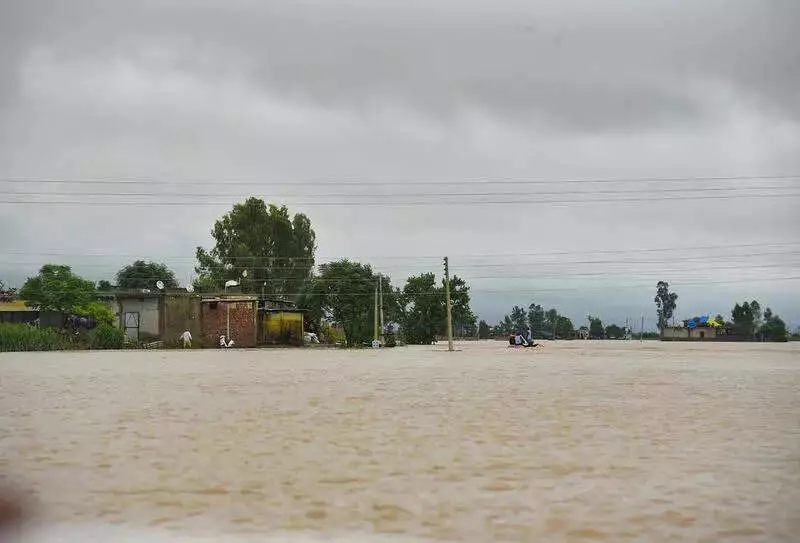
The National Green Tribunal (NGT) has stepped into the contentious issue of recurring floods in Punjab, issuing formal notices to key authorities. The action comes in response to a petition filed by the Public Action Committee (PAC) and others, which raises serious questions about dam operations, data transparency, and structural safety.
Core Allegations: Withheld Data and Flawed Operations
At the heart of the dispute is the alleged failure of the Bhakra Beas Management Board (BBMB) and the Punjab government to comply with the Dam Safety Act of 2021. PAC members Jaskirat Singh and Kuldeep Singh Khaira highlighted a critical development: from October 2023, the BBMB stopped making vital dam operation data public. This data, which includes reservoir levels, water inflows, and outflows, is crucial for downstream communities and administrations to prepare for floods.
The petitioners argue that this secrecy directly violates Section 35(1)(e) of the Dam Safety Act, which mandates public disclosure of information on anticipated water flows and flood warnings. "This discontinuation deprived downstream administrations, farmers, and the public of timely information during severe flooding," the PAC stated, calling it a major transparency and preparedness failure.

A Pattern of Floods and Unheeded Warnings
The petition connects this opacity to a pattern of devastating floods. PAC representatives Kapil Arora and Amandeep Singh Bains revealed that after analysing data in 2023, they approached governments seeking an investigation into flood causes. Later, in 2025, relying on information from reliable sources, the PAC identified a renewed flood risk.
Acting on the precautionary principle, the committee served a legal notice on August 9, 2025, to the BBMB, the Union Jal Shakti Ministry, and the Punjab government, urging immediate action. Despite India Meteorological Department (IMD) forecasts of heavy mid-August rainfall, reservoir levels were allowed to rise, leading to water releases under high-pressure conditions.
The PAC contends that reservoir operation targets are arbitrary and unscientific. They point to the practice of aiming for a reservoir level of around 1,680 feet by August's end, citing unchanged operational "rule curves" since 1990, ageing dam infrastructure, and altered climate patterns. These factors, they allege, have contributed to three major floods in Punjab in the last six years.
NGT Proceedings and the Path Ahead
The NGT's issuance of notice marks a significant step. The tribunal's focus will now be on determining whether statutory duties under the Dam Safety Act were fulfilled. This includes scrutinising compliance with rules on data disclosure, maintaining a flood cushion in reservoirs, and operating dams with precaution.
The proceedings have already seen procedural hurdles. Following the first hearing, the PAC filed affidavits disclosing their information sources and documents suggesting dam "deflection" occurred at water levels lower than traditionally targeted. In a subsequent hearing, the NGT noted that these filings, though submitted on time, were not on the official record and directed the registry to verify and place them properly.
With the notice now served, the legal battle shifts to a substantive examination of dam management practices. The outcome could set a crucial precedent for enforcing dam safety and transparency laws across India, aiming to protect vulnerable regions from man-made flood disasters.