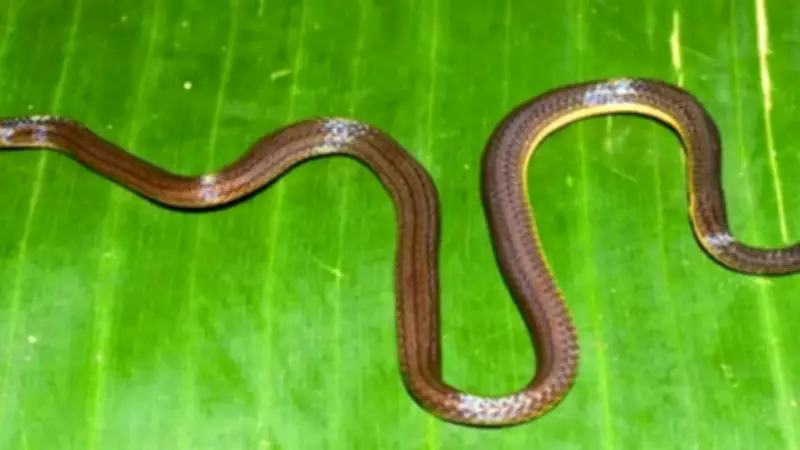
New Snake Species Calamaria garoensis Discovered in Meghalaya's Garo Hills
A significant scientific discovery has emerged from the dense forests of northeastern India with the identification of a previously unknown snake species named Calamaria garoensis. This remarkable find occurred in the Garo Hills region of Meghalaya, drawing considerable attention from both scientific communities and state leadership.
International Collaboration Behind the Discovery
The discovery resulted from an extensive collaborative effort involving multiple academic and research institutions from India and Indonesia. The research team comprised scientists from Help Earth, Cotton University, Assam Don Bosco University, Mizoram University, the Zoological Survey of India, and the National Research and Innovation Agency of Indonesia. This international partnership combined expertise across various scientific disciplines with particular emphasis on field research and taxonomic classification.
The comprehensive field surveys conducted in the Garo Hills were instrumental in identifying the unique characteristics that distinguish Calamaria garoensis from other known species. This organized scientific endeavor demonstrates how coordinated efforts between domestic and international researchers can yield significant biodiversity discoveries.

Chief Minister's Recognition and Ecological Significance
Meghalaya Chief Minister Conrad K Sangma publicly acknowledged this important discovery, congratulating the research team for their dedicated work. In his statement, the Chief Minister emphasized how such findings contribute to understanding and preserving the state's rich natural heritage.
The official recognition highlighted the ecological value of Meghalaya's forests and positioned the discovery of Calamaria garoensis as a testament to the biological richness present throughout the region. This endorsement from state leadership reflects growing attention toward biodiversity research and conservation initiatives in Meghalaya.
Garo Hills: A Biodiversity Hotspot Revealing Hidden Treasures
The Garo Hills region forms part of the Meghalaya biodiversity hotspot, characterized by dense tropical and subtropical forests that support an extraordinary variety of flora and fauna. Despite its ecological significance, many areas within this region remain scientifically underexplored, with numerous species still awaiting documentation.
The discovery of this new snake species adds to existing records of reptiles in the area and reinforces ongoing research indicating northeastern India as a crucial zone for herpetological diversity. Calamaria snakes, known for their small size and secretive nature, typically remain underground or concealed within leaf litter, making their detection particularly challenging and explaining why new species within this group continue to be identified.
The Importance of International Cooperation in Taxonomy
The identification of Calamaria garoensis required substantial cooperation between multiple institutions, with researchers contributing essential data, field observations, and analytical expertise. Such collaborative approaches prove especially valuable in taxonomy and biodiversity studies, particularly in regions where species diversity remains high but documentation remains incomplete.
The involvement of international research bodies strengthens the validation process for new species identification and enhances the scientific credibility of such discoveries. This model of cooperation sets a precedent for future biodiversity research in similarly rich but underexplored regions worldwide.
This discovery contributes significantly to the growing list of species documented in northeastern India, an area renowned for its thick forests and abundant wildlife. The finding underscores the importance of continued scientific exploration and international collaboration in uncovering the biological treasures hidden within Earth's most biodiverse regions.