The Catastrophic Eruption That Buried a Capital City
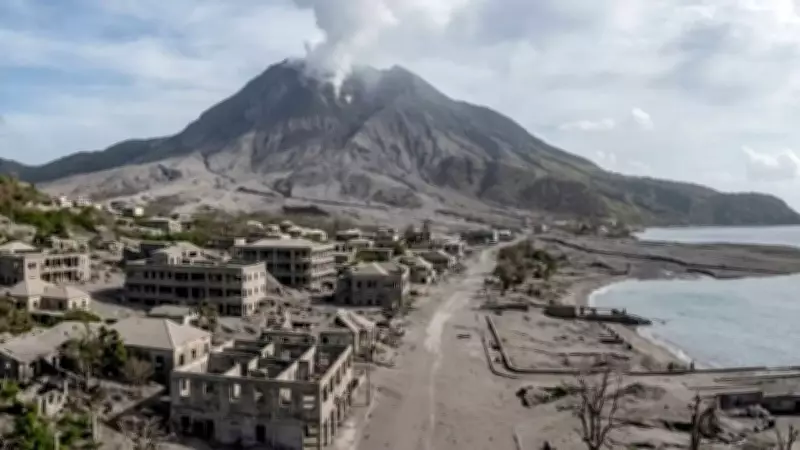
In 1997, the Soufrière Hills volcano on the Caribbean island of Montserrat erupted with devastating force, entombing the bustling capital city of Plymouth under many feet of ash and debris within just a few hours. This catastrophic event triggered a permanent evacuation, transforming a once-vibrant commercial center into a ghost town. According to the Montserrat Volcano Observatory, over 80 percent of Plymouth's infrastructure was utterly destroyed by the eruptions, leaving the city in ruins.
A Modern Pompeii: Legal Capital in an Exclusion Zone
Despite being completely uninhabitable and designated as an Exclusion Zone, Plymouth remarkably retains its legal status as Montserrat's capital to this day. Often compared to a 'Modern Pompeii,' the buried city serves as a powerful reminder of geology's destructive potential while simultaneously providing scientists with invaluable data about how volcanoes impact and displace modern civilizations over time. The government has relocated administrative functions to Brades in the island's north, yet constitutional records still recognize Plymouth as the official seat of government.
Pyroclastic Flows: The Mechanism of Destruction
The utter devastation of Plymouth was primarily caused by pyroclastic density currents (PDCs)—gravity-driven clouds of superheated gas and rock that raced down the volcano's slopes. Research published by the U.S. Geological Survey and the Montserrat Volcano Observatory reveals these flows reached temperatures exceeding 400 degrees Celsius (752 degrees Fahrenheit) and traveled at speeds over 100 miles per hour. Behaving like fast-moving liquids, these fluidized currents completely enveloped buildings from their foundations to second floors with a densely packed matrix of fine ash and tephra.

This rapid burial process preserved Plymouth in a frozen state, creating an unprecedented archaeological opportunity to study 20th-century Caribbean life through everyday items encased in volcanic material. These fragile artefacts represent a unique window into pre-eruption civilization that archaeologists are carefully examining to gain knowledge about 20th-century Caribbean culture and daily existence.
Monitoring Structural Decay in a Restricted Zone
The southern half of Montserrat remains designated as the Zone V Exclusion Area, inaccessible without police escort due to ongoing volcanic threats. This complete physical and legal isolation enables the Montserrat Volcano Observatory to conduct detailed studies using GPS and seismic sensors to monitor accelerated structural failure. Researchers are particularly interested in the corrosive loading effects caused by the weight and chemical acidity of the volcanic tephra that continues to degrade what remains of Plymouth's infrastructure.
Topographic Transformation and Environmental Changes
Research published in the Journal of the Geological Society indicates that the massive deposition of volcanic material permanently reconfigured Montserrat's topography and expanded its coastline. In some areas, ash layers reach over 12 meters (39 feet) thick, altering drainage basins and coastal geography. The high porosity of volcanic tephra acts as a thermal insulator, and combined with the absence of light, creates remarkably slow decay rates for organic materials and household artefacts buried beneath the ash.
According to data from NASA Earth Observatory, these environmental changes have fostered specialized pioneer plant species within the exclusion zone, providing scientists with a unique model of biological succession in a post-eruption tropical environment. The volcanic aftermath has essentially created a living laboratory where researchers can observe ecological recovery processes in real-time.
Scientific Legacy of a Buried City
The preservation of Plymouth offers multiple scientific benefits beyond immediate volcanic research. The city's frozen state provides archaeologists with an unprecedented opportunity to study 20th-century material culture in exceptional detail, while the environmental changes offer insights into ecological adaptation and recovery. Meanwhile, ongoing monitoring of structural decay helps volcanologists understand long-term impacts of volcanic deposits on human infrastructure.

Nearly three decades after the catastrophic eruption, Plymouth stands as both a memorial to volcanic destruction and a valuable scientific resource. The buried capital continues to yield important data about volcanic processes, archaeological preservation, and environmental adaptation, ensuring that this tragedy contributes to our broader understanding of natural disasters and their aftermath.