

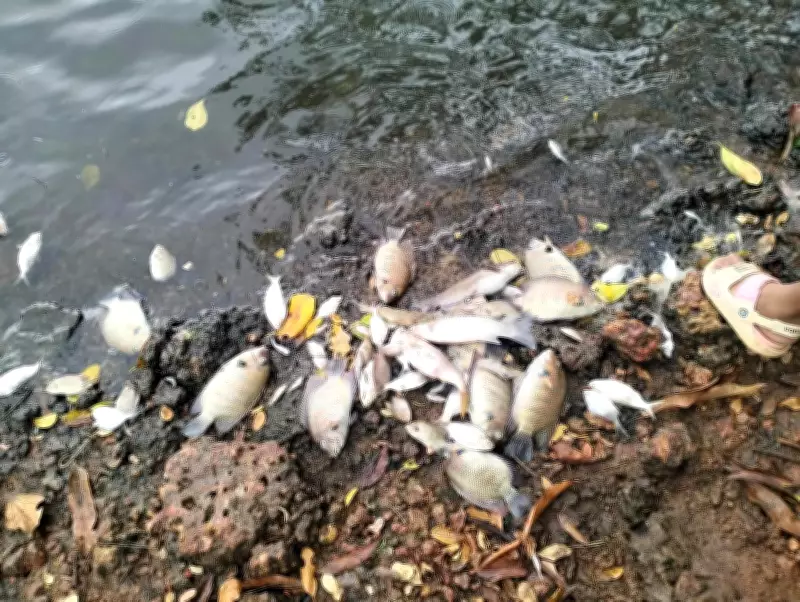
Mangaluru: Residents living along stretches of the Gurupura River near Kenjar and downstream of the Maravoor vented dam have started testing their well water following a recent mass fish death incident in the area. The Aranya, Parisara Mattu Havamana Badalavane Sangha (Society for Forest, Environment and Climate Change) reported that water samples from nearly 52 households in Thokur have been collected so far, with results expected within a week.
Environmental compensation available
Benedict Fernandes, secretary of the society, told TOI that residents can now seek environmental compensation free of cost. “All they need to do is submit a request letter to their local primary health centre (PHC) and obtain a water analysis report,” he explained. The society has filed a petition against the Mangaluru City Corporation over pollution of water bodies, particularly wells.
Growing interest in well testing
Fernandes noted that more households have expressed interest in having their wells examined. “Since the reports are issued by PHCs, they are authentic and reliable,” he added. Regarding the fish death incident, preliminary findings by the Karnataka State Pollution Control Board (KSPCB) suggest a malfunction at the Panchanady sewage treatment plant (STP). Samples have also been collected from the site where fish were found dead.

Residents have been advised to check their water analysis reports for the presence of E. coli bacteria, which indicates faecal contamination. Fernandes highlighted that the underground drainage (UGD) system has failed in several areas, making well water testing critical for those dependent on groundwater.
Importance of well conservation
Fernandes stressed the importance of conserving wells as the city experiences the effects of climate change. “If water supply from Thumbe is disrupted, the city may have to depend on local water sources, including wells. With forecasts warning that El Nino conditions could affect rainfall across large parts of the country from August onwards, protecting our existing water sources has become crucial,” he added.
About the Author: Deepthi Sanjiv is Deputy Chief of Bureau at TOI, Mangaluru, covering crime, environment, health, politics, education, civic issues, art and culture, and human interest stories.






