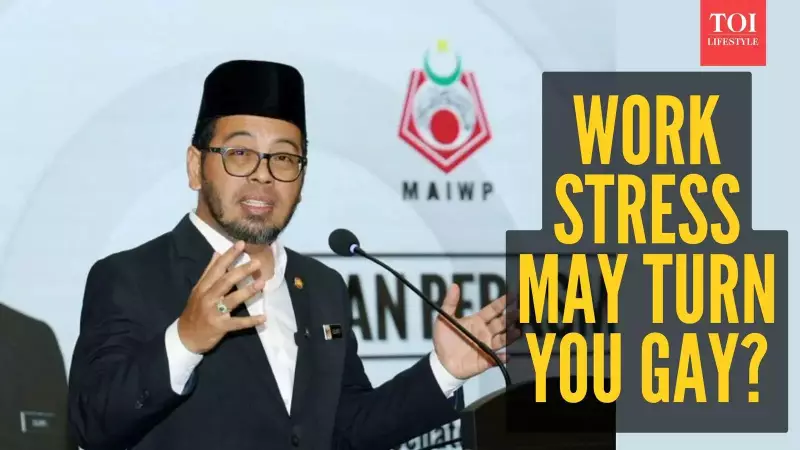
Malaysian Minister's Parliamentary Remarks on LGBT Causes Ignite Controversy
A recent parliamentary statement by Dr Zulkifli Hasan, Malaysia's Minister in the Prime Minister's Department for Religious Affairs, has generated significant national discussion after he suggested that work-related stress and other factors might contribute to involvement in what he described as an "LGBT lifestyle." The comments were made in response to parliamentary questions and have become one of the most debated political moments in Malaysia this week.
Parliamentary Inquiry and Cited Research
In a written parliamentary reply, Dr Zulkifli referenced a 2017 study by Sulaiman et al. that examined contributing factors to behaviors he categorized as "LGBT-related." The minister indicated that work stress, social influences, and lack of religious practice could potentially play roles in someone becoming involved with the LGBT community. He acknowledged that "a combination of these elements may contribute to the development of LGBT-related behavior" while also noting that the Malaysian government lacks official statistics on the country's LGBT population size.
The remarks emerged during broader parliamentary inquiries into LGBT trends, including age distribution, ethnic background, and primary contributing factors. Responding to questions about why such behaviors occur, the minister referenced the 2017 research to explain that multiple influences—including social circles, personal experiences, and stress—might intertwine.

Enforcement Data and Immediate Reactions
Dr Zulkifli also revealed that from 2022 to 2025, Malaysian authorities recorded 135 cases related to LGBT activities as arrests or prosecutions, reflecting ongoing law enforcement engagement with the issue. However, his specific framing linking work stress with sexual orientation or lifestyle choices struck many observers as surprising and scientifically questionable, sparking immediate online backlash.
Social media responses ranged from incredulity to personal reflections, with one user commenting on the apparent disconnect between the minister's claims and established scientific understanding. The framing has particularly resonated in Malaysia's context, where LGBTQ+ individuals already face legal challenges, social stigma, and discrimination.
Scientific Community's Response
While Dr Zulkifli cited research examining various personal and social factors, leading health and human rights organizations strongly reject the notion that sexual orientation is caused by environmental factors like stress or workplace conditions. Major psychological and medical bodies worldwide have long maintained that sexual orientation is neither a choice nor a direct result of life stressors.
Recent studies provide important context about stress and LGBTQ+ experiences:
- A 2024 study in the Journal of Occupational Health Psychology found that "sexual minority workers reported significantly higher levels of work-related stress and psychological distress compared to heterosexual workers, with discrimination and lack of workplace support contributing to adverse outcomes."
- A 2022 study in the International Journal of Environmental Research and Public Health revealed that "sexual and gender minority employees experienced elevated psychological distress and reduced well-being in workplace environments where discrimination and minority stressors were reported."
- Research from 2014 in Psychoneuroendocrinology noted that "sexual orientation is associated with different physiological stress responses, indicating distinct profiles of endocrine reactivity," showing how biological stress responses differ by orientation rather than stress creating orientation.
These studies document stress patterns experienced by sexual minorities but provide no evidence that stress creates sexual orientation. The scientific consensus maintains that sexual orientation is a complex trait influenced by genetic, biological, and developmental factors—not environmental stressors like work pressure.

Human Rights Implications and Social Context
Human rights advocates have noted that conversion-based claims or practices, including suggestions that stress or life circumstances "cause" someone to be LGBTQ+, have historically been used to justify harmful interventions and undermine LGBT+ individuals' dignity. Such views lack scientific merit and can contribute to discrimination, exclusion, and mental health harm.
A 2025 study on negative messaging and mental health found that repeated exposure to anti-LGBT narratives from public figures is associated with fear of societal rejection and heightened psychological distress among LGBT+ people. In Malaysia's context—where civil law and Sharia provisions affect sexual conduct—such statements carry particular weight.
Political and Cultural Tensions
Dr Zulkifli's comments illustrate how political discourse intersects with sensitive social issues in ways that provoke intense debate. Supporters of the minister's position, primarily from conservative or religious constituencies, argue that the government has legitimate interest in addressing behaviors they view as outside traditional norms.
However, even some conservative voices acknowledge that science does not support stress as a causal factor for sexual orientation, highlighting tensions between religious, cultural, and scientific narratives. The minister's admission about Malaysia's lack of comprehensive LGBT population statistics further complicates informed policy discussions.
The ongoing debate reflects broader global conversations about sexual orientation, scientific understanding, and the role of government in personal identity matters—all playing out within Malaysia's unique cultural and legal landscape.