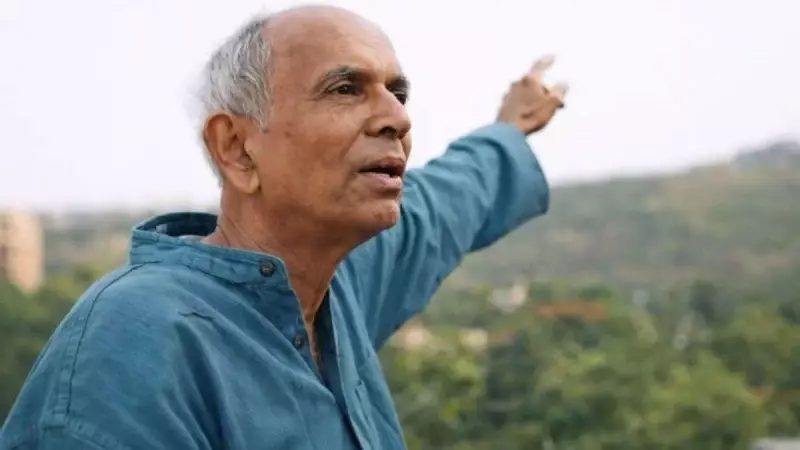
Professor Madhav Gadgil, a revered Indian ecologist and the founding chairman of the Centre for Ecological Sciences at the Indian Institute of Science, Bangalore, has long been a guiding voice for environmental conservation in India. His work, most notably the pivotal Gadgil Committee Report on the Western Ghats, underscores a deep commitment to preserving India's ecological heritage. Beyond his scientific contributions, Gadgil's words offer powerful insights into humanity's relationship with nature. Here, we explore some of his most significant and thought-provoking quotes.
The Core Philosophy: Harmony with Nature
At the heart of Madhav Gadgil's environmental philosophy lies a simple yet profound truth: humans are not separate from nature but an integral part of it. He consistently challenges the dominant narrative of exploitation and control. One of his most cited quotes powerfully states, "We have to learn to live as a part of nature, not apart from it." This statement is a direct critique of the modern development model that views natural resources as mere commodities to be extracted. Gadgil advocates for a paradigm shift towards coexistence, where human activities are designed to work within ecological limits rather than against them.
He further elaborates on this by emphasizing the wisdom embedded in traditional practices. Gadgil has often pointed out that many indigenous and local communities have historically managed their resources sustainably because their survival was directly linked to the health of their environment. His quotes serve as a bridge, connecting ancient ecological knowledge with contemporary conservation challenges, urging society to relearn the art of living in balance.

A Critique of Unsustainable Development
Madhav Gadgil is known for his candid and critical assessment of India's development trajectory, especially in ecologically sensitive regions. His words often carry a warning about the consequences of ignoring environmental limits. He has famously remarked, "The Western Ghats are a treasure trove of biodiversity, and we are treating it like a quarry." This vivid metaphor highlights the conflict between short-term economic gains from mining and infrastructure projects and the long-term, irreversible loss of unique ecosystems and the services they provide.
Another poignant quote addresses the broader crisis: "We are in the midst of an environmental crisis that is largely of our own making." Gadgil does not shy away from assigning responsibility. He argues that the crisis stems from policy choices that prioritize rapid industrialization and urbanization without adequate safeguards. His quotes from the context of the Western Ghats report controversy are particularly striking, where he expressed disappointment that the recommendations for graded, participatory conservation were heavily diluted due to political and industrial pressure.
Quotes on Science, Democracy, and Public Participation
For Gadgil, environmental protection is not just a scientific or bureaucratic issue; it is fundamentally a democratic one. He strongly believes in the power of informed public participation. One of his key assertions is, "Good science must inform public policy, and the public must have a say in decisions that affect their environment." This quote encapsulates his advocacy for transparent, evidence-based policymaking that involves local stakeholders, particularly those who are most dependent on and knowledgeable about their local ecosystems.
He has also spoken about the role of education and awareness. Gadgil believes that fostering an ecological sensibility is crucial for the future. He encourages a sense of wonder and responsibility towards nature, suggesting that conservation begins with appreciation. His quotes often serve as educational tools, simplifying complex ecological principles into relatable ideas that can inspire action at both individual and community levels.

The Legacy and Call to Action
The enduring relevance of Madhav Gadgil's quotes lies in their timeless call for prudence, respect, and collective action. They are not mere observations but a compelling call to action for policymakers, citizens, and future generations. His work reminds us that "development that destroys the environment is not development at all, but a road to ruin." This stark warning reinforces the concept of sustainable development, where economic progress does not come at the expense of ecological integrity.
In conclusion, Madhav Gadgil's powerful quotes distill a lifetime of ecological research and advocacy into memorable, impactful phrases. They challenge us to rethink our priorities, learn from traditional wisdom, and demand accountability in environmental governance. As India and the world grapple with climate change and biodiversity loss, Gadgil's words serve as a crucial moral and scientific compass, guiding the way towards a more sustainable and equitable relationship with our planet.