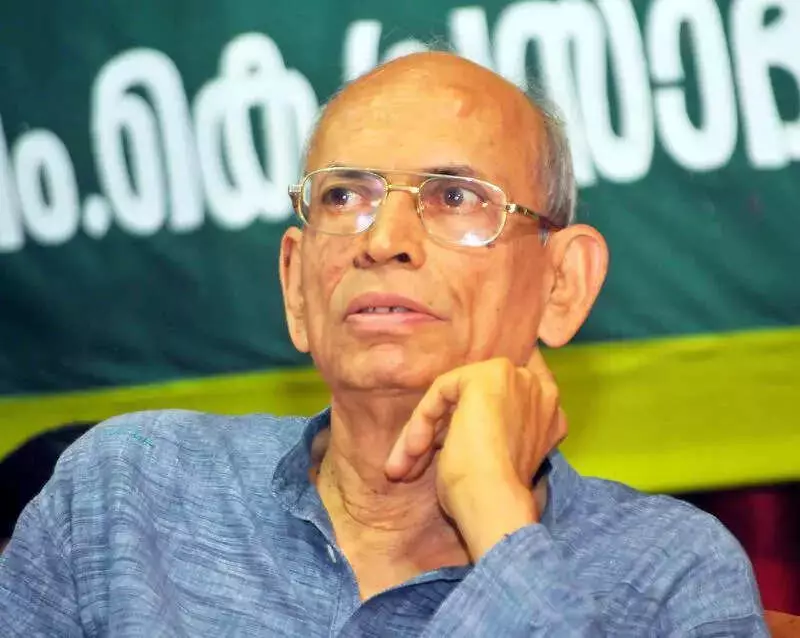
The environmental movement in India, and particularly in Kerala, lost one of its most influential voices with the passing of renowned ecologist Professor Madhav Gadgil on Thursday. Gadgil, best known for chairing the Western Ghats Ecology Expert Panel (WGEEP), fundamentally shifted the national conversation about nature from romantic idealism to a rigorous, science-based discourse focused on ecology, conservation, and sustainable management.
From Poets to Data: A Scientific Awakening
For decades, Kerala's environmental consciousness was primarily nurtured by poets and artists who celebrated nature's beauty in cultural gatherings. "Later came nature camps and spiritual ideas of harmony," explained T V Sajeev, an environmental scientist at the Kerala Forest Research Institute. Professor Gadgil, however, introduced the uncompromising language of science. He interpreted complex data and ecological logic in a way that ordinary citizens could grasp, grounding every argument in solid facts and figures. His deep commitment to engaging with grassroots communities made his work uniquely accessible and powerful.
Sajeev emphasized that Gadgil held a firm belief in the vast, often undocumented, ecological knowledge possessed by local and indigenous communities. The WGEEP report was a monumental attempt to bridge this local wisdom with formal science, creating a comprehensive governance framework for the Western Ghats. It presented a visionary model where conservation and development could be integrated, advocating for a democratic approach to ecology that included human-dominated landscapes, not just pristine forests.

A Thorn for Some, A Beacon for Many
Despite the Kerala state government's official rejection of the WGEEP report, Gadgil's influence only grew among the public. His public talks drew remarkably diverse crowds of common citizens, students, activists, scientists, lawyers, and policymakers. This popularity surged after the catastrophic floods and landslides of 2018, when people turned to Gadgil for explanations. His analyses framed these disasters not as isolated 'acts of God' but as direct outcomes of long-term environmental mismanagement, offering a crucial framework for understanding.
C K Vishnudas, director of the Hume Centre for Ecology and Wildlife, noted that Gadgil succeeded in awakening Kerala's collective environmental consciousness through his evidence-based clarity. "He brought the Western Ghats into mainstream public discussion," Vishnudas said. The report's contents were translated and discussed in 88 grama sabhas, with some local bodies even passing resolutions for its implementation. A public meeting in Kalpetta attracted around 1,500 people. To this day, discussions on issues like Wayanad's ecology, slope stability, or zonation inevitably reference Gadgil's work.
A Complex Legacy and Unflinching Stance
Gadgil's straightforward, data-driven approach was initially unsettling for a state unaccustomed to scientists speaking with such open, evidence-based clarity. Ironically, even some hardcore environmentalists eventually distanced themselves from him. He became a significant thorn for mining interests and land encroachers. His role in uniting environmentalists across Kerala was, however, undeniable.
He never shied away from expressing unpopular opinions grounded in reality. Beyond traditional environmentalism, he spoke candidly about farmers' distress. He argued pragmatically that animals like wild pigs, which cause serious farm damage, should be culled and their meat utilized, advocating for scientifically informed population control methods—a stance that drew criticism from various quarters.
The ultimate testament to his impact lies in a profound irony. While officially rejected, many recommendations from the WGEEP report are now being implemented in practice across Kerala. "We are following many of Gadgil's ideas," conceded Vishnudas, "just without naming him." Professor Madhav Gadgil's legacy, therefore, is not confined to reports or policies; it is embedded in the very way Kerala now questions, debates, and understands its fragile and vital relationship with its environment.