

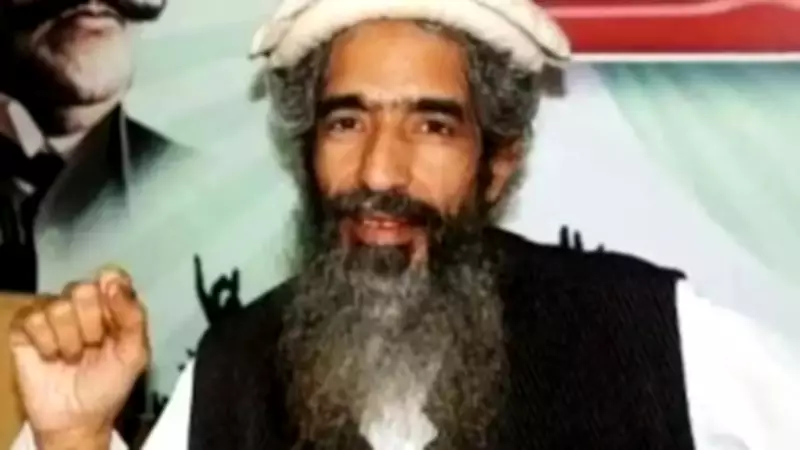
Lashkar-e-Taiba Co-Founder Amir Hamza Targeted in Brazen Lahore Shooting
In a shocking incident that unfolded on the streets of Lahore, Amir Hamza, a co-founder of the banned terrorist organization Lashkar-e-Taiba (LeT), narrowly escaped death after being ambushed by motorcycle-borne assailants. The attack occurred shortly after Hamza had participated in a televised appearance at the News 24 office alongside Judge Nazir Ahmad Ghazi. As he exited the building and entered his car, two gunmen on a motorcycle approached with chilling precision and opened fire in a sudden, brazen assault before swiftly disappearing into the city's traffic.
Hamza survived the attempt but sustained life-threatening injuries, in a scene reminiscent of dramatic portrayals in films like Bollywood's 'Dhurandhar 2', which depicts similar motorcycle attacks. This violent episode has drawn immediate condemnation from political groups linked to LeT and raised serious questions about security measures in Punjab.
Connection to the 2005 Indian Institute of Science Bengaluru Attack
Amir Hamza is not only a key figure in LeT but has also been implicated in significant terrorist activities, including the 2005 attack on the Indian Institute of Science (IISc) in Bengaluru. According to prosecution claims, Hamza, along with other accused individuals, carried out this assault in December 2005, which resulted in casualties and widespread fear. The legal proceedings related to this case have been complex and drawn-out, involving multiple accused persons across different jurisdictions.

Among those accused in the IISc case was Sabahuddin Ahamad, also known as Sabha and Farhan, a resident of Bihar. Ahamad was alleged to have facilitated the entry and exit of LeT operative Abu Hamza into India for the attack. While Hamza and six other accused were never arrested, Ahamad was apprehended in Nepal in 2008 and later produced before a Bengaluru court via video conferencing from Lucknow District Jail. During hearings, charges were framed against him in Hindi and English, languages he claimed to understand, and he pleaded not guilty.
Legal Proceedings and Acquittals in the IISc Case
The chargesheet filed in 2008 listed several accused, including Abu Hamza, Mujamil alias Yusuf, Abdul Azeez, Athif, Abubakar, Zaki-ur-Rehman Lakhvi, Mohammed Habeeb alias Habeeb Miya, and Basheer. At that time, Ahamad was the only one in custody, having been arrested earlier by Uttar Pradesh Police in a separate terror case. Notably, Zaki-ur-Rehman Lakhvi was reportedly convicted in Pakistan on terror financing charges in January 2021.
Habeeb Miya, listed as accused No. 7 and originally from Agartala, was arrested in March 2017 by the Central Crime Branch in Bengaluru. However, he later filed a discharge petition in 2018, arguing that the prosecution failed to establish his involvement. The court acquitted him on June 14, 2021, due to a lack of prima facie evidence, highlighting the challenges in securing convictions in such cases.
According to the prosecution, Ahamad confessed to his role in the IISc attack and named Habeeb Miya as an accomplice who helped him cross the Indian border illegally from Tripura into Bangladesh. Ahamad was described as being involved in jihadi activities, having received training from terrorist organizations in Pakistan and meeting LeT operatives in Dhaka before the attack.
Political Reactions and Hamza's Designation as a Terrorist
Amir Hamza is regarded as LeT's second most important leader after its chief, Hafiz Saeed, who has been imprisoned in Lahore's Kot Lakhpat Jail since 2019 on terror financing convictions. In response to the attack on Hamza, the Pakistan Markazi Muslim League (PMML), a political front of Hafiz Saeed’s banned Jamaat-ud-Dawah (JuD), issued a joint statement strongly condemning the incident. Leaders including Hafiz Talha Saeed demanded the immediate arrest of the attackers and criticized the Punjab government for security failures, urging enhanced protection for religious scholars.

Hamza has been designated as a terrorist by the United States and has a long history with LeT, including serving as head of its "special campaigns" department. In 2018, he formed a fundraising group for LeT after the Pakistani government banned JuD and the Falah-e-Insaniat Foundation, underscoring his ongoing influence within the organization.
This attack in Lahore not only highlights the persistent threats faced by high-profile terrorist figures but also sheds light on the intricate web of legal and political issues surrounding global terrorism. As investigations continue, the incident serves as a stark reminder of the volatile security landscape in the region.





