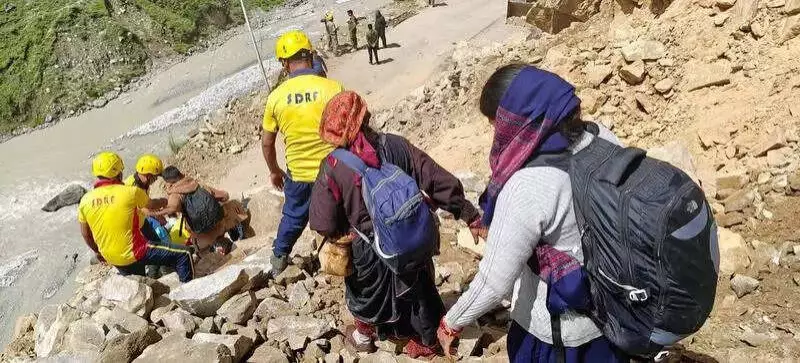
Monsoon Fury Unleashes Landslide Crisis in Garhwal Himalayas
A new scientific study has pinpointed the cause of a dramatic spike in landslides across the Garhwal Himalayas during the 2025 monsoon season. The research, published in the journal Landslides, reveals that intense and unpredictable rainfall was the primary driver. This heavy rain reactivated old, dormant landslide zones that had been stable for years.
Rain Saturated the Slopes
The study explains how prolonged rainfall saturated the soil and rock. This saturation drastically reduced the shear strength along pre-existing slip surfaces. Essentially, the ground became too heavy and weak to hold itself together. The research is titled Preliminary assessment of heavy rainfall-induced landslides and reactivation of old landslides in the Garhwal Himalayas.
It highlights the region's inherent vulnerability. The Garhwal Himalayas feature fragile geological formations, very steep slopes, and active tectonic forces. These natural risks were made much worse by human activities.

Human Actions Amplified the Danger
The authors, Soumik Saha and Biswajit Bera from Sidho-Kanho-Birsha University, state that several man-made factors weakened slope stability. These include:
- Widening of mountain roads
- Cutting into hillsides
- Unplanned construction projects
- Poorly designed drainage systems
All these activities disturbed the natural landscape, making it more prone to failure.
Districts and Highways Hardest Hit
Based on field investigations, the researchers documented a sharp increase in landslides during August and September 2025. Three districts emerged as the worst-affected areas:
- Chamoli
- Rudraprayag
- Uttarkashi
Several known trouble spots saw repeated slope failures. These locations included Pagalnala, Langsi, and stretches along the crucial Gangotri and Yamunotri highways. The consequences were severe and widespread.
Travel and Pilgrimage Severely Disrupted
The landslide incidents caused major disruptions. Traffic was halted for extended periods. Many villages were completely cut off from essential services. The famous Char Dham Yatra pilgrimage was severely affected, with pilgrim movement impacted for weeks.
Record-Breaking Rainfall Data
The study used rainfall data from India-WRIS and official disaster reports. It found that the 2025 monsoon rainfall was among the highest recorded in the past five years at several locations.
For example, Gaurikund in Rudraprayag district received more than 4,800 mm of rain during the monsoon months. Other areas like Uttarkashi, Pipalkoti, and Kalagarh also experienced significantly above-normal precipitation.
The authors note that short-duration extreme rainfall events, combined with prolonged wet spells, played a critical role in triggering the widespread slope failures.
Field Observations Paint a Grim Picture
Field teams observed frequent debris flows and shallow landslides. These occurred along highways, rural roads, and near settlements. A major problem is the concentration of infrastructure and homes in known landslide-prone zones. This significantly increased exposure and risk, especially when old landslides were reactivated.
The researchers also connect the crisis to changing monsoon patterns linked to climate variability. They note that intense, short-duration rainfall events are becoming more frequent. This trend is likely to further escalate landslide hazards in the Himalayan region.
Calls for Action and Better Planning
The study ends with a strong warning and recommendations. It calls for urgent action to mitigate future risks:
- Detailed mapping of all landslide zones
- Continuous monitoring of vulnerable slopes
- Integration of rainfall thresholds into early-warning systems
- Scientifically planned slope-stabilisation measures
- Stricter regulation of construction in fragile mountain terrain
The authors warn that without these urgent mitigation measures and improved land-use planning, landslide risks in the Garhwal Himalayas will continue to rise. The consequences will be serious for lives, livelihoods, and regional connectivity.