

Environmental Alert in Kolkata: Vigilant Citizen Prevents Plastic Fire Threatening Historic Tree
In a concerning incident that highlights growing environmental challenges in urban areas, a potentially hazardous act of ecological negligence was narrowly averted on Wednesday in Kolkata. The episode unfolded on Suren Sarkar Street near the ecologically sensitive Subhas Sarobar area, where quick thinking by an observant local resident prevented what could have escalated into a significant environmental disaster.
The Incident: Plastic Burning at Tree Base
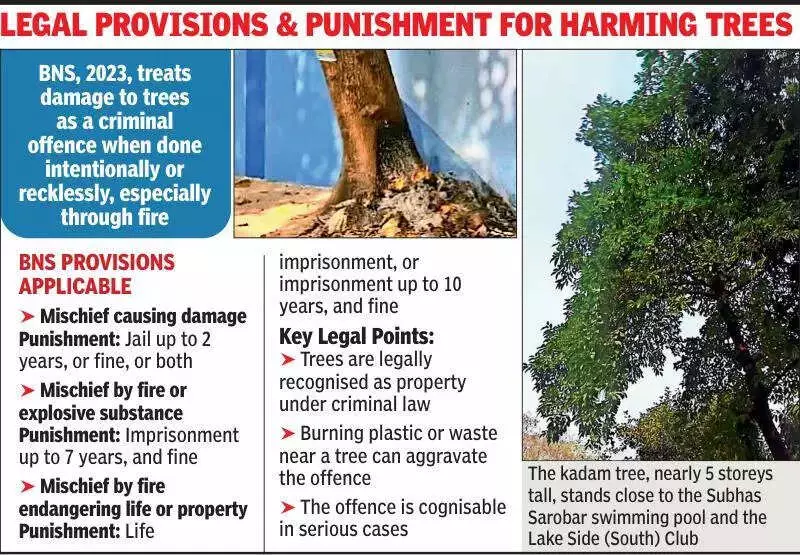
The situation began when a man, who had recently moved to the locality and identified himself as an engineering geologist, allegedly set fire to a sack filled with plastic waste directly at the base of a majestic kadam tree. This particular burflower tree stands nearly five storeys tall and serves as an important ecological landmark in the area, positioned close to both the Subhas Sarobar swimming pool and the Lake Side (South) Club.
The tree is known to provide habitat for various bird species including parakeets, making it a valuable component of local biodiversity. The act of burning plastic at its base posed multiple threats: toxic fumes from burning plastic, potential damage to the tree's root system, soil contamination, and significant fire hazard in a densely populated urban area.

Citizen Intervention and Confrontation
The dangerous activity was witnessed by Saptorshi Roy Choudhury, a 33-year-old musician and founder of a local music school who describes himself as "a conscientious citizen deeply attached to the area's ecology." Roy Choudhury immediately recognized the threat and approached the individual.
"I was aghast when I saw the man setting fire to plastic waste right at the base of the tree," Roy Choudhury recounted. "When I approached him and asked him to stop, he became extremely aggressive and defiant. When I tried to pour water on the fire, he almost pushed me aside."
Fearing further escalation of the confrontation, Roy Choudhury began documenting the incident on his mobile phone. According to his account, the accused man challenged him to share the video with authorities, allegedly stating "you could not do anything to me." This brazen attitude highlighted what environmental activists describe as a troubling disconnect between education and environmental awareness.
Police Response and Environmental Concerns
Disturbed by the incident and the man's aggressive response, Roy Choudhury contacted the Beleghata Police Station. Initially, police advised him to simply pour water over the fire, but Roy Choudhury explained the man's hostile behavior. Police personnel later visited the location, conducted inquiries, and departed without taking immediate action against the individual.
Roy Choudhury also shared the video evidence with police via WhatsApp and informed the Kolkata Municipal Corporation about the incident. Despite these efforts, he claimed that no substantial follow-up action was taken against the accused, who reportedly insisted he was "doing the right thing" by burning the plastic waste.
Local residents expressed bewilderment at this justification, questioning both the logic and legality of burning plastic near a living tree. Environmental experts emphasize that burning plastic releases dangerous toxins into the air and can cause severe, long-term damage to soil quality and tree health.
Ecological Significance and Community Response
"The kadam tree is an old one and an important part of the biodiversity of Subhas Sarobar, which is a known biodiversity hotspot," explained Roy Choudhury. "Like many residents here, I am very proud of this neighbourhood. It was especially disheartening to see an educated person commit such a reckless act."
Bonani Kakkar, a prominent environmental activist and founder of People United for Better Living in Calcutta (PUBLIC), provided context for such incidents. "There is no dearth of educated people who are environment and climate sceptics," she noted. "They argue that the world is for only human beings and all other living beings, including trees, are pests."

This perspective highlights a broader challenge in environmental conservation efforts, where scientific education doesn't always translate to ecological awareness or responsible behavior. The incident serves as a reminder of the constant vigilance required to protect urban green spaces and biodiversity hotspots in rapidly developing cities.
Broader Implications for Urban Environmental Protection
The Kolkata incident raises important questions about:
- Public awareness regarding proper waste disposal methods
- Enforcement of environmental protection regulations in urban areas
- Community involvement in safeguarding local ecosystems
- Educational approaches to bridge the gap between technical knowledge and environmental responsibility
While the immediate threat was contained thanks to citizen intervention, the episode underscores the need for stronger environmental governance, better public education about ecological impacts, and more responsive mechanisms for addressing environmental violations in urban settings. As cities like Kolkata continue to grow and develop, balancing urban expansion with ecological preservation remains a critical challenge requiring both institutional support and active citizen participation.





