Kolkata's Clean Air Progress Threatened by LPG Shortage Crisis
The gradual transition toward cleaner fuels in Kolkata, once hailed as a significant milestone in the city's battle against air pollution, has been abruptly disrupted by the ongoing liquefied petroleum gas (LPG) crisis connected to conflicts in West Asia. The shortage and escalating costs of LPG are compelling households, street vendors, and commercial establishments to revert to highly polluting alternatives such as coal and diesel, raising serious concerns about a potential surge in the city's already problematic air pollution levels.
Historical Pollution Sources and Targeted Interventions
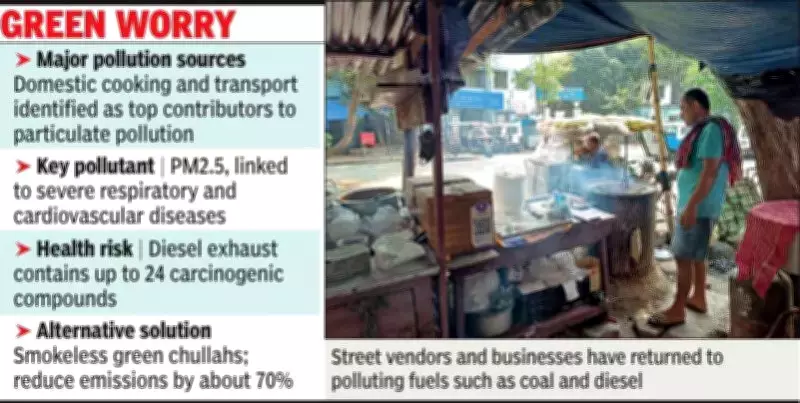
Comprehensive studies on pollution source apportionment, initially conducted by the National Environmental Engineering Research Institute (NEERI) and later corroborated by The Energy and Resources Institute (TERI), identified domestic cooking and transportation as the two primary contributors to particulate pollution in Kolkata. Fine particulate matter, particularly PM2.5, presents severe health hazards as these microscopic particles can infiltrate deep into lung tissue and even enter the bloodstream.
To address this critical issue, the West Bengal Pollution Control Board (WBPCB) implemented targeted interventions designed to encourage small businesses and residential users to adopt LPG. As part of an innovative pilot program, the board distributed 200 LPG stoves along with gas connections to street food vendors and provided LPG-powered irons to 150 traditional pressers, commonly known as ironers. The outcomes were remarkably positive, with numerous street food vendors abandoning their coal-fired ovens in favor of cleaner LPG-based cooking systems.

According to scientists from the WBPCB, this initiative played a crucial role in diminishing local emissions and enhancing air quality across several Kolkata neighborhoods, marking a notable environmental achievement.
Current Crisis Reversing Environmental Gains
However, the present fuel crisis is systematically undoing these hard-won environmental improvements. WBPCB officials expressed alarm upon discovering that numerous food vendors and ironers who had previously adopted LPG have already returned to conventional, polluting fuels like coal. This troubling trend extends beyond small-scale enterprises, with some restaurants, food-processing units, and industrial establishments that had earlier transitioned to cleaner fuels now reverting to coal or diesel operations.
Environmental experts warn that this regression could substantially elevate pollution levels throughout the city. Diesel combustion alone releases a dangerous array of hazardous pollutants into the atmosphere, compounding existing air quality challenges.
Alternative Solutions and Future Directions
WBPCB Chairman Kalyan Rudra highlighted an alternative approach to mitigate the crisis: the implementation of smokeless green chullahs. "These improved cooking stoves are engineered to reduce emissions by approximately 70% compared to traditional coal-fired ovens," Rudra explained. "The board has already distributed around 11,000 green chullahs to urban slums and rural households. Additionally, 200 larger community versions have been installed in schools for preparing midday meals, effectively replacing conventional coal-based cooking systems."
The current situation underscores the fragile nature of environmental progress when confronted with geopolitical and economic disruptions. As Kolkata grapples with this fuel crisis, the reversal toward polluting fuels threatens to erase years of dedicated efforts to improve the city's air quality, posing renewed health risks to its residents and challenging policymakers to develop resilient, sustainable solutions.