A welcome north-westerly breeze swept across Kolkata on Tuesday, acting as a natural cleanser for the city's air. This steady wind effectively countered the seasonal menace of falling temperatures and thermal inversion, phenomena that typically trap harmful pollutants close to the ground during the winter months.
Wind Offers Respite from Winter Smog
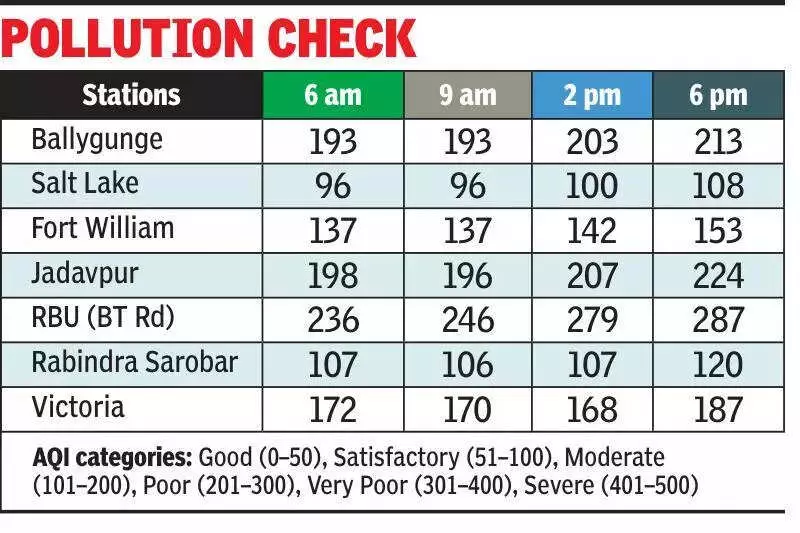
While the mercury continued to drop, the movement of air played a crucial role in dispersing accumulated pollutants. This prevented what could have been a sharp and hazardous deterioration in air quality. Data from monitoring stations reflected this improvement. For most of the day, the Salt Lake station recorded air in the satisfactory category (AQI 51–100), only slipping into the moderate range by evening. Four other stations across the city consistently remained within the moderate air quality zone (AQI 101–200).
Airport Operations Unaffected Despite Morning Haze
The 10–20 kmph wind not only cleared the air but also intensified the chill and prevented the formation of dense fog, a common winter hazard for the city. This was a boon for air travel. Operations at the Netaji Subhas Chandra Bose International Airport continued smoothly without any disruptions. Visibility did see a dip in the early morning, falling to 400 metres at 7:30 AM and further down to 200 metres by 8 AM. However, conditions improved rapidly thereafter.

By 8:30 AM, visibility was back to 400 metres, rising to 700 metres at 9 AM and nearly 900 metres by 9:30 AM. Airport officials confirmed that the presence of a Category-III Instrument Landing System (ILS), which allows operations even when visibility is as low as 50 metres, ensured there were no flight delays.
Meteorologists Explain the Unusual Clarity
Meteorologists attributed the clearer skies to the prevailing wind patterns rather than typical winter weather systems. G K Das, the head of the Dum Dum Met office, provided details. "The temperature is steadily going down. On Tuesday, the Dum Dum observatory recorded a minimum of 9.5°C," he said. He explained that Kolkata usually experiences radiation fog following rainfall linked to western disturbances. "This year, however, strong north-westerly winds prevented fog formation," Das added.
Despite the day's improvement, experts sounded a note of caution. They warned that the relief offered by the breeze might only be temporary. If calm conditions set in or temperatures drop further in the coming days, the air quality in Kolkata could once again worsen, highlighting the fragile balance of the city's winter atmosphere.