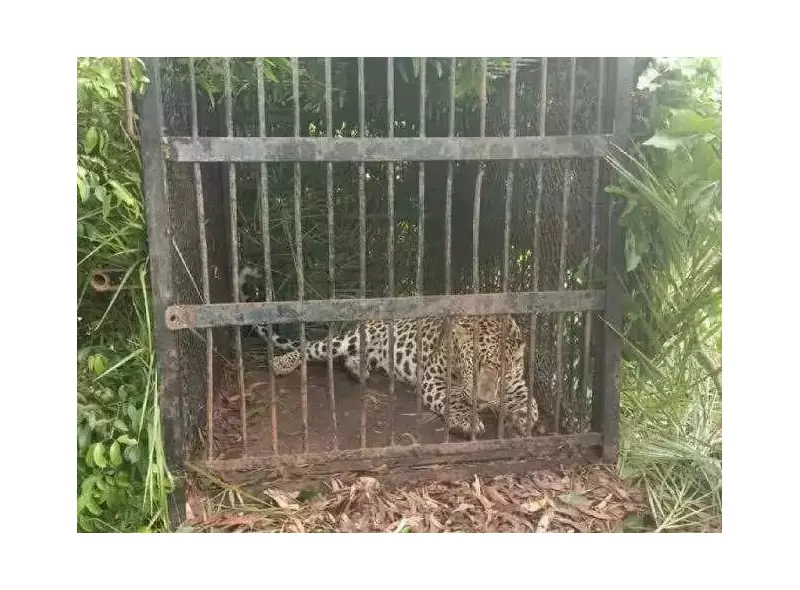
A crucial workshop focused on managing the growing challenge of human-wildlife interactions was conducted in Kolhapur on Monday. The event, held at the Chhatrapati Shahu Auditorium within the Government Rest House, was organized by the Kolhapur forest department to equip frontline staff with essential skills.
Training for Coexistence and Rescue
The session provided comprehensive training on the standard operating procedures (SOPs) for rescuing wild animals in distress. Experts detailed specific techniques for handling different species and outlined critical safety measures for the public venturing near animal habitats. The aim was to build a systematic and safe response protocol.
The workshop was led by Nachiket Utpat, Director of Wildlife Conservation, and Kiran Rahalkar, Director of Conservation Action at the Pune-based RESQ Charitable Trust. The event saw participation from senior officials including Chief Conservator of Forests G Guruprasad, Deputy Conservator of Forests Dhairyasheel Patil, Additional Superintendent of Police Dheeraj Kumar Bacchu, and Honorary Wildlife Warden Raman Kulkarni.

Reframing the Conflict: A Call for Communication and Tolerance
During his address, Nachiket Utpat shared a stark statistic: the RESQ team handles between 15 to 30 new cases of wildlife distress every single day. He urged a shift in perspective, stating that these incidents are not politically motivated but are ecological realities. Utpat criticized social media for often amplifying panic unnecessarily.
"When animals suffer due to human actions, it goes unnoticed, but the reverse becomes a headline," he noted. He proposed moving away from the term 'conflict' and instead calling it 'man-animal communication.' Utpat clarified that while leopard population growth isn't scientifically proven, human expansion has shrunk natural buffer zones, forcing wildlife to adapt. "Humans must also show tolerance for coexistence," he emphasized.
Practical Challenges and Inter-Departmental Coordination
Chief Conservator G Guruprasad highlighted the complex nature of these situations, admitting there are no fixed solutions. Strategies must evolve with circumstances. He pointed out that while forest staff receive theoretical training, the real test comes during unpredictable rescue operations where animal behavior and public stress create volatile conditions. "Support from other departments is crucial," Guruprasad stated.
Echoing this sentiment, Additional SP Dheeraj Kumar Bacchu stressed the importance of seamless teamwork between various government departments to execute effective and safe rescues. The workshop was attended by all forest officials, range forest officers, rangers, rapid rescue team members, and representatives from irrigation and other relevant departments.
Honorary Wildlife Warden Raman Kulkarni issued a grave warning about accelerating biodiversity loss, noting that extinction rates have skyrocketed from one species every decade to one every two minutes. He identified a modern urban catalyst for conflict: street dogs. Kulkarni explained that with vultures largely extinct, dogs have become the primary scavengers, and their presence in urban fringes inadvertently attracts leopards closer to human settlements.