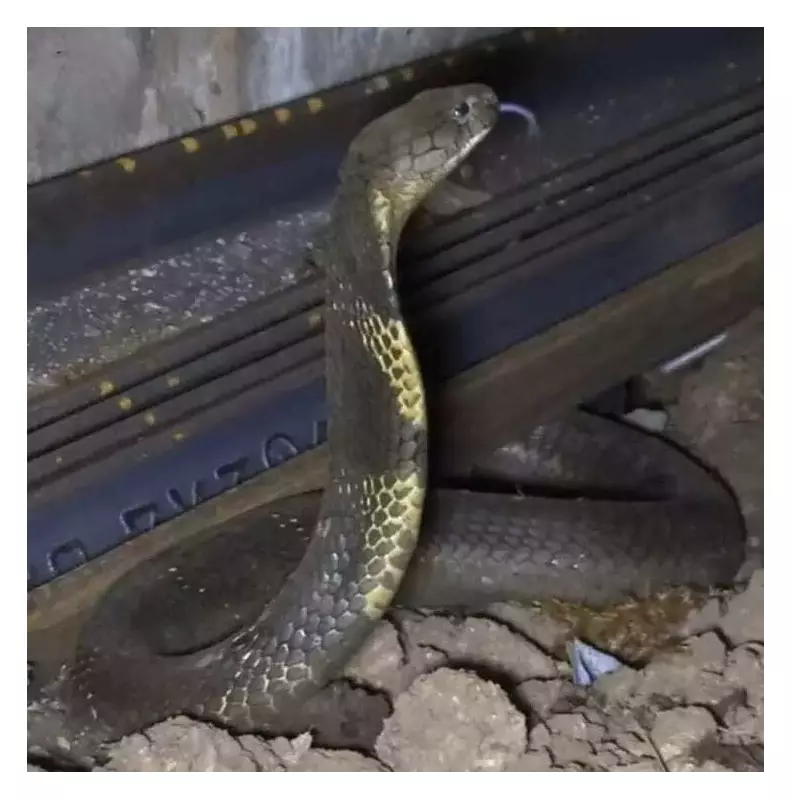
King Cobras Discovered in Unlikely Railway Corridors Across Goa
A groundbreaking ecological study has revealed startling findings about the distribution of king cobras in the coastal state of Goa. A dedicated researcher from Surat, collaborating with an international scientific team, has successfully mapped forty-seven confirmed localities of the majestic ophiophagus kaalinga across the region. The research presents a compelling narrative of how even the most formidable apex predators are being subtly influenced by expanding human-dominated landscapes.
Mapping the Serpent's Trail: North vs. South Goa
The comprehensive survey documented a total of forty-seven king cobra locations, with a notable geographical split. Eighteen of these confirmed sightings were recorded in North Goa, while a higher concentration of twenty-nine localities was identified in South Goa. This detailed mapping provides invaluable data for conservationists and wildlife authorities seeking to understand the habitat preferences and movement patterns of this iconic reptile species.
Railway Tracks: An Unexpected Habitat
The most surprising aspect of the research emerged from the discovery that several of these forest-dwelling snakes were found in areas entirely unsuitable for their natural ecology. Specifically, five king cobras were documented in close proximity to railway tracks and corridors. In one particularly remarkable instance, a king cobra was discovered coiled directly beneath the tracks at a Goan railway station. This observation marks the first-ever recorded instance of a king cobra utilizing such a human-engineered environment, challenging previous assumptions about their habitat limitations.

The Research Team and Methodology
The pioneering study, led by Indian scientist Dikansh Parmar and published in the prestigious journal Biotropica on January 26, represents a significant contribution to herpetology. The international collaboration included renowned experts Dennis Rödder from Germany and Hinrich Kaiser from the United States. Critical local expertise was provided by Goan wildlife rescuers Rinku Gupta and Amrut Singh of the Animal Rescue Squad Goa (ARSG).
The team employed a multifaceted research approach, combining:
- Direct field observations and verifications
- Analysis of wildlife rescue records
- Advanced species distribution modeling
While the scientific models accurately predicted suitable forest habitats for the king cobras, they could not account for the five individuals found in what researchers term "ecologically improbable" locations along the railway lines.
Years of Dedicated Fieldwork
Dikansh Parmar, who personally coordinated and spearheaded the extensive study, invested years of rigorous fieldwork to compile this dataset. His methodology involved painstaking verification of sightings, systematic tracking of rescue operations, and the innovative integration of local ecological knowledge with sophisticated scientific modeling. Reflecting on the demanding nature of the research, Parmar stated, "I pushed my mind and body to the limit for this study. Every record, every rescue, every kilometre walked was critical to understanding these snakes and their hidden journeys."
Conservation Implications and Expert Insights
When contacted for commentary, Goan wildlife rescuer Amrut Singh emphasized the broader implications of these findings. He noted that the research clearly demonstrates how human infrastructure can unintentionally shape and redirect wildlife movement, even for apex predators as significant as the king cobra. "It is the need of the hour that development planning does not take a toll on wildlife and their natural habitats," Singh asserted, highlighting the urgent need for ecological considerations in infrastructure projects.

A Startling Hypothesis: Snakes on a Train?
The study proposes a particularly striking and novel hypothesis to explain some of these unusual sightings. Researchers suggest that king cobras may occasionally, and unintentionally, hitch rides on trains, potentially expanding their geographical range beyond natural barriers. These observations indicate that human transportation infrastructure may be silently creating unintended corridors for apex predators. While this opens new avenues for ecological understanding, it also raises important questions about potential human-wildlife safety concerns that require careful management and further study.
This research underscores the complex and often unexpected interactions between wildlife and human development, offering crucial insights for future conservation strategies and sustainable planning in Goa and beyond.