

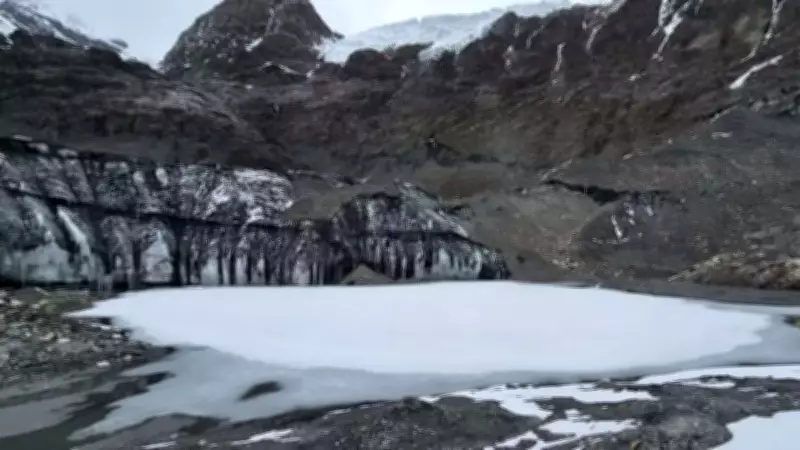
Deep in Arunachal Pradesh's Tawang district, nestled in the eastern Himalayas, the Khangri Glacier is undergoing rapid changes that have scientists concerned. Once a stable sheet of ice, it is now melting quickly, collapsing, and giving rise to a new glacial lake. This lake is not just a scenic addition; if its natural dam bursts, it could unleash floods downstream, devastating villages and farmland in minutes.
What Is Happening at Khangri Glacier?
According to the Arunachal Times, researchers from the Centre for Earth Sciences and Himalayan Studies recently returned from Khangri with a report that serves as a warning. They observed unstable ground, sinking ice zones, and a new lake forming at approximately 16,500 feet, indicating that the glacier is deteriorating. When glaciers retreat, meltwater accumulates behind fragile barriers of rock and ice. If these barriers crack, the water escapes in a glacial lake outburst flood (GLOF). Such disasters are not uncommon and have impacted mountain communities before, with the threat now escalating.
The Khangri Glacier's significance extends beyond mountain villages. It lies in the Mago Chu basin, part of the Brahmaputra river system, which provides water to millions across India, Bhutan, Bangladesh, and Tibet. A breach at Khangri could send shockwaves downstream, far beyond Arunachal's borders. Scientists noted that the glacier snout, its lowest edge, is crumbling rapidly, and a large sinking zone in the ice suggests structural failure. These are classic signs of a glacier in trouble.

The Emerging Glacial Lake
The newly forming lake has drawn particular attention. Glacial lakes are increasingly appearing across the Himalayas as warmer temperatures accelerate melting. When their unstable natural dams give way, water blasts into valleys, flooding roads, farms, and forests. The team warned that if the lake at Khangri spills, it could trigger floods throughout the Brahmaputra basin, affecting lives across multiple countries.
Why Khangri Glacier Is Critical
Water Security: Glaciers act as freshwater reservoirs, slowly releasing meltwater into rivers, especially during dry seasons. This sustains agriculture, ecosystems, and communities far downstream. The eastern Himalayas feed Asia's largest river systems; losing these glaciers would have severe consequences for everyone below.
If melting at Khangri continues, two problems emerge simultaneously: too much water now and too little later. First, sudden floods, landslides, and unstable terrain occur. Then, as ice reserves shrink, rivers dry up, and the water source disappears. Scientists consider combating this double threat one of the biggest climate challenges for Himalayan regions.
Geopolitical Importance: The Mago Chu basin connects to the Brahmaputra, so any instability affects water flow, disaster risk, and long-term cooperation between India, Bangladesh, Bhutan, and Tibet. Climate disruptions here are not merely local; they could reshape diplomacy, farming, and water security for years.
What Lies Ahead?
Khangri's story is part of a larger crisis. Glaciers across the Himalayas, known as the "Third Pole," are melting faster than ever, creating new lakes, landslides, and deadly flash floods. India has experienced numerous glacier-linked disasters in recent years, particularly in Uttarakhand and other mountain states.
Rising temperatures are breaking up ice that used to remain frozen year-round. Even good snowfall does not slow the melt; warming regional temperatures overpower any gains. Khangri's scientists observed that despite healthy snowfall this winter, melting continued at a critical rate due to persistent climate shifts.
Monitoring these glaciers is now more crucial than ever. The recent expedition placed five new stakes on the glacier at about 17,000 feet, using high-tech GPS tools and drills. Researchers collected meltwater and sediment samples and retrieved data from weather stations. This research tracks glacier changes over time, helps predict disasters, and informs water resource planning.
Early warning systems could save lives. With thousands of dangerous glacial lakes across the Himalayas, experts emphasize the need for stronger policies and risk reduction plans. Without them, mountain communities are flying blind.

This is not just a Khangri problem. It is a crisis for mountain glaciers worldwide, from the Andes to the Arctic, all shrinking as the planet warms. But in crowded South Asia, the stakes are higher: hundreds of millions rely on glacier-fed rivers for drinking water, crops, and livelihoods.





