Iran's Supreme Leader Makes Rare Admission on Protest Deaths
In a significant development, Iran's Supreme Leader Ayatollah Ali Khamenei has publicly acknowledged for the first time that thousands of people lost their lives during the country's recent nationwide protests. This rare statement from the clerical leadership comes amid a harsh government crackdown that has attracted widespread international attention.
Khamenei's Televised Address Points Finger at Foreign Powers
Speaking during a televised address on Saturday, Khamenei addressed the unrest that began in late December. He stated the protests resulted in what he described as "several thousand" deaths. The Supreme Leader attributed some casualties to what he called "inhuman, savage" conditions. However, he primarily blamed the United States and other foreign actors rather than Iran's own security forces for the violence.
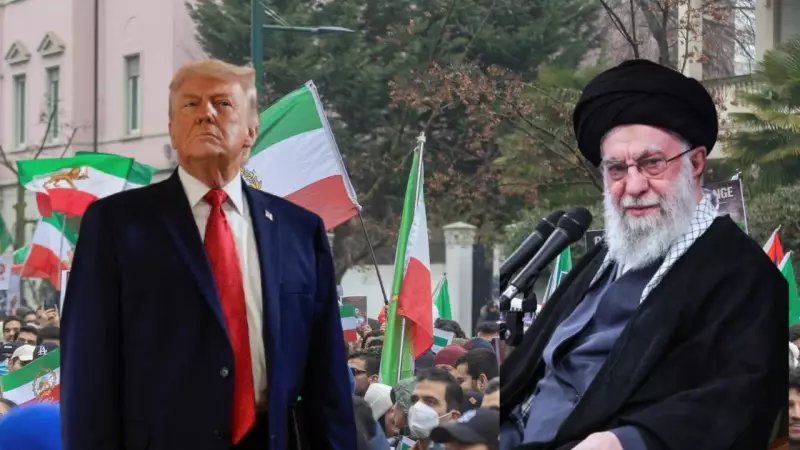
Khamenei specifically accused US President Donald Trump of encouraging the demonstrations. He labeled Trump a "criminal" for commenting on and supporting the protest movement from abroad. The Supreme Leader claimed protesters were being manipulated by foreign powers and warned that authorities would not allow what he termed "criminals" to escape punishment.

Human Rights Groups Condemn Crackdown
Human rights organizations have strongly condemned the Iranian government's response to the protests. These groups estimate that more than 3,000 people have died in clashes between demonstrators and security forces. Verifying exact figures remains challenging due to intermittent internet shutdowns imposed by Iranian authorities throughout the crisis.
The protests initially focused on economic hardships and rising inflation but gradually evolved into broader anti-regime demonstrations. Security forces responded with significant force, leading to numerous casualties and arrests across the country.
Trump Intensifies Rhetoric Against Iranian Leadership
In response to Khamenei's statements, President Trump escalated his criticism of Iran's leadership. He declared it was "time to look for new leadership" in Iran during an interview with Politico. Trump criticized the clerical establishment's handling of the unrest and condemned Khamenei's role in the violence.
"What he is guilty of, as the leader of a country, is the complete destruction of the country and the use of violence at levels never seen before," Trump stated. He added, "Leadership is about respect, not fear and death."
The US President further described Khamenei as "a sick man who should run his country properly and stop killing people." Trump claimed Iran had become "the worst place to live anywhere in the world because of poor leadership."
Khamenei Continues Accusations on Social Media
Despite the exchange of accusations, Khamenei maintained his position on social media platform X. He posted that "the recent sedition was orchestrated by the US. The US did the planning and took action. The US's goal is to devour Iran."
This ongoing war of words occurs as global attention focuses on Iran's political stability. International observers are watching for potential further pressure on the Iranian government from foreign powers.
Life Shows Signs of Normalization
Meanwhile, daily life in Tehran and other major Iranian cities appears to be returning to normal after weeks of protests and security operations. Streets that witnessed demonstrations now show reduced security presence, though tensions remain beneath the surface.
The admission from Iran's Supreme Leader represents an unusual moment of transparency from the typically secretive leadership. However, his deflection of blame toward foreign powers contrasts sharply with human rights organizations' assessments and Trump's escalating rhetoric.
This development marks a crucial moment in Iran's recent political history, with both domestic and international implications for the country's future stability and international relations.