

Kerala Researchers Investigate Invisible Arctic Pollutants in Major Indian Polar Program
In a significant scientific endeavor to trace invisible pollutants in the Arctic region, two young researchers from the Kerala University of Fisheries and Ocean Studies (Kufos) have successfully collected samples and conducted preliminary tests. This work forms a crucial part of India's comprehensive polar research program, highlighting the nation's growing role in global environmental science.
Participation in India's Arctic Expeditions
The researchers conducted their sampling activities under India's Summer and Winter Arctic Expeditions for 2025-26. These expeditions were organized by the National Centre for Polar and Ocean Research (NCPOR), operating under the Union Ministry of Earth Sciences (MoES). The project's selection for both seasonal components underscores its scientific importance within ongoing Arctic environmental studies.
Research Project Leadership and Collaboration
The research project, titled 'Pesticidal POPs and Chemicals of Emerging Arctic Concern (CEACs) in the Arctic Fjords, Rivers, and Lakes', was led by Professor Anu Gopinath. Professor Gopinath serves as the head of the Department of Aquatic Environment Management at Kufos. The project was executed in collaboration with Professor Paromita Chakraborty from the SRM Institute of Science and Technology in Tamil Nadu, who acted as the co-principal investigator.

"The proposal was selected by NCPOR for both the summer and winter components of the expedition, highlighting its scientific importance in ongoing Arctic environmental studies," stated Professor Anu Gopinath, emphasizing the project's recognition and value.
Field Investigations Across Seasons
Research scholar Kirthiga S S participated in the summer batch of the expedition in August 2025. During this phase, she carried out extensive field-based scientific investigations focused on environmental sampling and observations within Arctic aquatic systems. These systems included diverse environments such as fjords, rivers, and lakes, providing a broad ecological scope for the study.
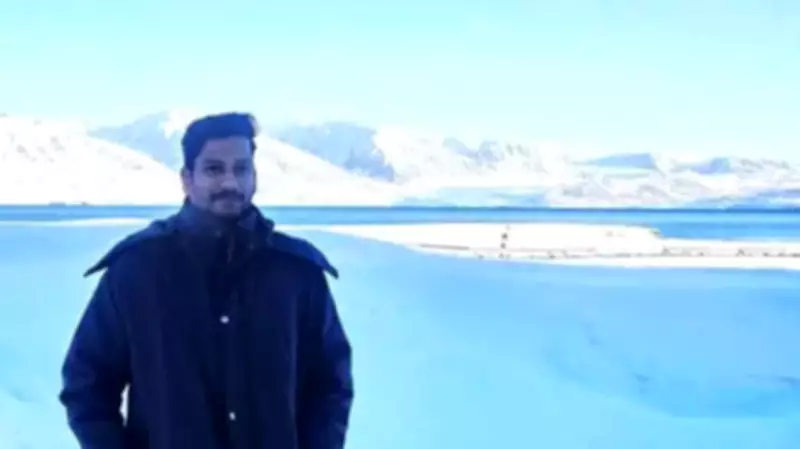
To advance the project further, her colleague Dhinesh R joined the winter expedition in March of this year. He continued the field investigations and scientific activities under the extreme and challenging conditions characteristic of the Arctic winter. The participation of researchers in both seasonal expeditions enabled the team to collect invaluable environmental data under varying climatic and ecological conditions in the polar region, offering a more comprehensive understanding of pollutant dynamics.
Sample Collection and Future Analysis
During both expeditions, the research team meticulously collected environmental samples from various Arctic aquatic environments. These samples are slated to undergo detailed chemical analysis and geospatial assessment. The primary objectives of these analyses are to determine pollutant concentrations, identify transport pathways, and evaluate potential ecological impacts of these invisible contaminants.
Academic Publication and Broader Impact
In addition to the expedition activities, the research team has already made a scholarly contribution by publishing a research article. The article, titled 'Baseline investigation, GIS-based sediment transport index and risk assessment for microplastics and pesticides profiling in the inter-fjord Arctic systems', appears in the internationally reputed Journal of Environmental Chemical Engineering. This publication marks an early output from their ongoing work and adds to the scientific discourse on Arctic pollution.
This research initiative not only advances our understanding of pollutant transport to remote polar regions but also showcases the capabilities of Indian institutions in contributing to critical global environmental challenges. The work of these Kerala-based researchers represents a meaningful step in monitoring and assessing the health of the Arctic ecosystem.






