

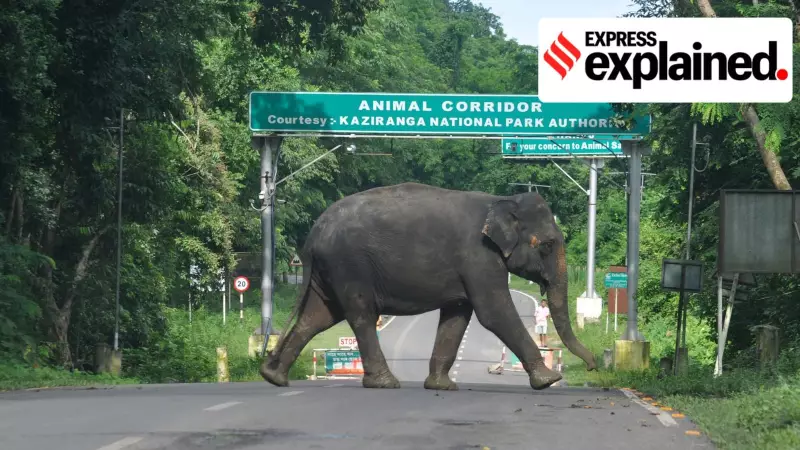
Kaziranga Elevated Corridor to Reduce Animal Deaths in Assam National Park
Prime Minister Narendra Modi will flag off a new elevated corridor in Assam this Sunday. The project targets a critical issue in Kaziranga National Park. Heavy traffic on highways has caused many animal deaths over the years. This corridor promises a long-term solution for safer wildlife movement.
Project Details and Funding
The corridor spans 34.5 kilometers and costs Rs 6,950 crore. It forms part of an existing highway that links Kaziranga and Eastern Assam to Guwahati. Officials designed it to let animals cross underneath safely. Currently, floods disrupt their natural routes, forcing risky highway crossings.
Kaziranga National Park sits on the Brahmaputra floodplains in Assam. It hosts the world's largest population of one-horned rhinoceroses. The park also shelters 37 mammal species and nearly 500 bird species. National Highway 715 runs along its southern boundary, connecting Tezpur to Eastern Assam towns.

Highway Threats to Wildlife
The highway poses a major threat to park animals. Dr Rathin Barman, Director of Wildlife Trust of India, explains the problem. Animals naturally move to the Karbi Anglong Hills during floods. Human development, including the highway, blocks this passage. This disruption leads to dangerous attempts to cross busy roads.
Traffic volume compounds the issue. This financial year, the highway sees an average of 13,800 passenger cars daily. A 2022 study by Gauhati University recorded 6,036 animal deaths from vehicle collisions in one year. Over 63% of these deaths occurred during flood seasons from April to September. High vehicle speeds were a key factor in these incidents.
Government Plans and Construction
The Union government approved widening an 86.675-km highway stretch to four lanes in October. A large portion of this stretch borders or crosses the park. The project includes building the 34.5-km elevated corridor. It will upgrade 30.22 km of existing roads and construct 21 km of greenfield bypasses around Jakhalabandha and Bokakhat.
Authorities state the corridor will decongest the area and improve connectivity between Guwahati, Kaziranga, and Numaligarh. Arun Vignesh, Kaziranga Divisional Forest Officer, notes traffic increases daily. He believes the elevated road can manage heavier traffic while safeguarding animals.
Current Interventions and Future Hopes
Park officials already use animal sensor systems in six crossing areas. These systems alert staff when animals approach the highway, allowing traffic regulation. However, Vignesh calls this a limited intervention. The new corridor aims to provide a more permanent solution.
Some activists worry construction might disturb wildlife. Dr Barman acknowledges this concern but supports the project. He emphasizes minimizing disturbance during construction. He views the overpass as a way to balance development and conservation. For three decades, he has seen the problem grow with increasing traffic.
The corridor represents a significant step in protecting Kaziranga's unique ecosystem. It addresses both safety for animals and connectivity for people. As Assam moves forward, this project highlights the importance of eco-friendly designs in development.






