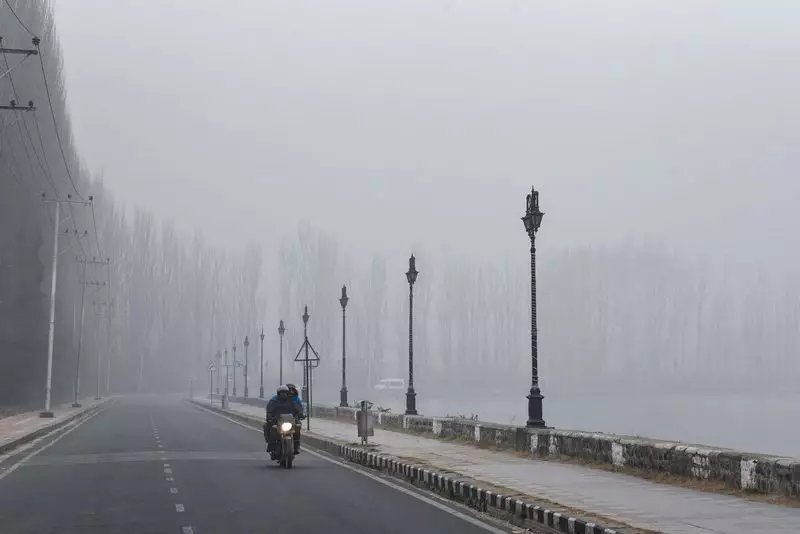
Residents of the Kashmir Valley experienced a notably milder night as minimum temperatures stayed comfortably above the freezing mark on Saturday. This shift provided a temporary break from the region's characteristic harsh winter chill, according to the latest data from the local meteorological department.
Detailed Temperature Readings Across the Region
The summer capital, Srinagar, recorded a minimum temperature of 3.3 degrees Celsius, which is significantly higher than the sub-zero levels typical for this season. Other major towns also followed this warming trend. The famous tourist destination of Pahalgam, which often serves as a base for the Amarnath Yatra, registered a low of 0.8 degrees Celsius. Meanwhile, the ski-resort town of Gulmarg saw its mercury settle at 0.4 degrees Celsius.
In the Jammu division, conditions varied. The winter capital, Jammu, experienced a relatively warmer night at 10.3 degrees Celsius. The town of Katra, the gateway to the Vaishno Devi shrine, recorded a minimum of 9.6 degrees Celsius. Batote registered 6.6 degrees Celsius, Bannni recorded 5.2 degrees Celsius, and Bhaderwah saw a temperature of 4.0 degrees Celsius.

Weather Forecast and Expected Conditions
The meteorological centre has issued a forecast indicating that dry weather is likely to prevail across Jammu and Kashmir over the next 24 hours. While the immediate respite from intense cold is welcome, the department has not ruled out the possibility of a return to colder conditions. The current weather pattern is being closely monitored for any significant changes that could affect the valley.
This period of above-freezing temperatures, especially in the Kashmir Valley, is a notable deviation from the norm for late winter. It impacts daily life, agriculture, and tourism, offering a brief window where the severe cold wave conditions abate.
Implications for Residents and Agriculture
The rise in nighttime temperatures brings temporary relief to the populace, reducing the reliance on heating appliances and easing the hardships associated with extreme cold, particularly for vulnerable communities. However, such fluctuations are also critical for horticulture, a mainstay of the local economy. Orchards of apples, cherries, and other fruits are sensitive to temperature swings, and farmers keep a watchful eye on the weather patterns during this season.
While no immediate weather warnings have been issued, authorities advise citizens to stay updated with the official forecasts as conditions in the Himalayan region can change rapidly. The overall trend suggests a temporary mild spell before winter potentially tightens its grip again on the region.