Climate Change Reshapes Karnataka's Iconic Coffee Belt
In the historic coffee-growing regions of Kodagu, Chikkamagaluru, and Hassan in Karnataka, farmers report that traditional agricultural calendars are becoming obsolete due to climate change. Jacob Mammen, managing director of Badra Estates, emphasizes that unpredictable weather patterns are severely impacting the cultivation of classic coffee varieties such as Arabica and Robusta.
Unpredictable Weather Disrupts Coffee Cycles
The core challenge, according to Mammen, stems from increasingly erratic rainfall. Coffee plants rely on precise rain sequences for optimal flowering: an initial shower triggers blooming, followed by a backup shower about two weeks later to secure flower setting. In recent years, however, growers have encountered irregular conditions—excessive rain, insufficient precipitation, or mistimed downpours—that disrupt this cycle and directly reduce yields.
Extreme weather events are also on the rise. Mammen notes that hailstorms last year destroyed coffee flowers on his estate, leading to complete crop loss in affected zones. Unseasonal rains further complicate harvesting and bean quality. "Early showers, sometimes as early as January, can cause new flowers to bloom while ripe cherries remain on the plant," he explains. "This forces pickers to halt harvesting to protect fresh flowers, while rain damages ripe cherries, degrading bean quality."

Rising Interest in Climate-Resilient Coffee Varieties
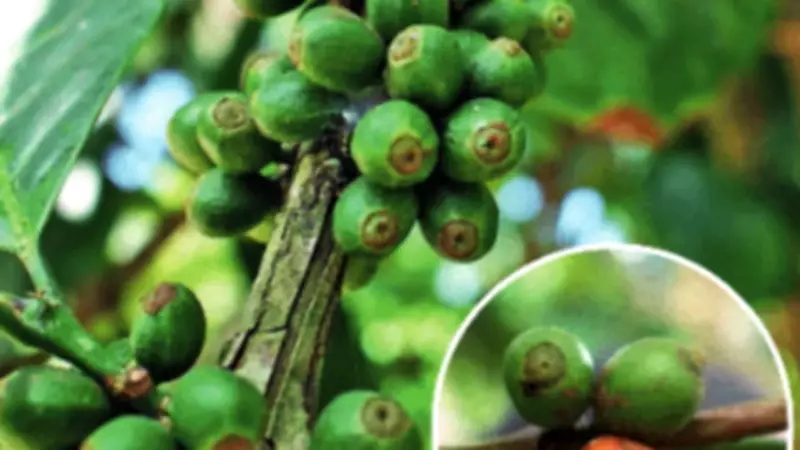
Amid these challenges, attention is shifting toward climate-resilient coffee species like Liberica. Traditionally grown as a boundary or fence-line crop, Liberica is now being reconsidered for broader cultivation. Coffea liberica boasts greater tolerance to high temperatures, thanks to its deep root systems that access water from lower soil layers, enhancing drought survival. It also shows robust resistance to diseases like coffee leaf rust and can withstand heavy rainfall and storms due to its sturdy structure.
Market dynamics are fueling this interest. Jacob Mammen highlights that buyers in India and internationally are increasingly curious about Liberica's distinct fruity and sweet flavor profile, which differentiates it from Arabica and Robusta. However, Liberica faces hurdles, notably lower yields compared to traditional varieties, partly because it is often grown as a tree crop rather than in managed plantations.
Exploring Excelsa and Other Adaptive Measures
Another resilient variety, Excelsa, shares many traits with Liberica and thrives in high temperatures, irregular rainfall, and humid conditions. Adhi Savla, senior manager for Coffee Community at Blue Tokai, notes that Excelsa is sourced from South Indian Coffee Company (SICC) but is currently sold out due to limited experimental lots. "Excelsa offers a heavier body with distinctive cola-like notes, providing a unique experience for coffee drinkers," he says.
Akshay Dashrath, co-founder of SICC and a fifth-generation grower, points out that excessive moisture, such as 33 inches of rain in a single month in 2024, poses challenges for Arabica and Robusta, but Excelsa excels due to its deep-rooted nature. Their Mooleh Manay Estate in Coorg produces about three tonnes of clean Excelsa annually.
Planters are also adopting other adaptation strategies. Arvind Rao, former chairman of the Karnataka Planters' Association, explains that while climate-resilient varieties are not widely available, farmers are conserving water, building storage tanks, and implementing irrigation to mitigate drought during blossom periods. Shade regulation has been adjusted to maintain cooler temperatures, and soil health is prioritized through composting to improve water retention.
Data-Driven Adaptation and Future Outlook
Binny Varghese, an industry observer and processing expert, notes that some existing varieties like S795 Arabica remain resilient, offering high yields and rust resistance with flavors of mocha or chocolate. He emphasizes that adaptation now involves integrated approaches: "It's not just about planting new varieties but includes canopy management, spacing, moisture control, selective picking, and adjusting processing styles for inconsistent ripeness."

Climate discussions on coffee estates have evolved from cautious talks to data-driven analyses. Younger producers use modeling to track irregular blossom showers, temperature spikes, and unexpected rain during drying, all affecting bean quality. In Karnataka's hills, planters are proactively adapting to secure the future of coffee cultivation amidst escalating climate risks.