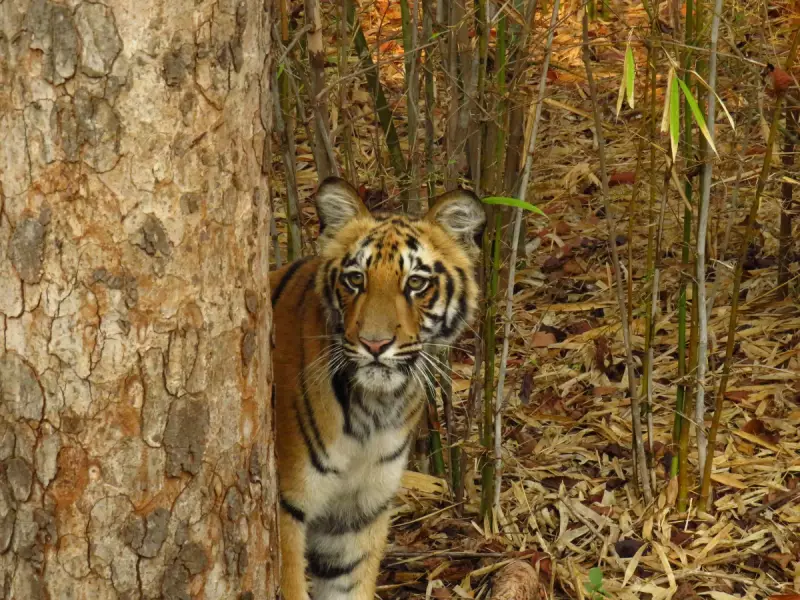
In a significant boost for wildlife conservation, Bihar is poised to establish its second tiger reserve. The National Tiger Conservation Authority (NTCA) has granted in-principle approval to upgrade the Kaimur Wildlife Sanctuary (KWS) to the status of a tiger reserve.
A Major Step for Big Cat Conservation
Environment, Forest and Climate Change Minister Pramod Kumar Chandravanshi made the announcement on Wednesday. He confirmed that the proposal has been forwarded to the Central government for the final notification. This development follows years of efforts, initiated in 2018, after consistent reports of tiger sightings, pugmarks, and prey remains were documented in the sanctuary for the first time since 1995.
The Kaimur Wildlife Sanctuary, sprawling across 1,504 square kilometres in the Kaimur and Rohtas districts, is Bihar's largest wildlife sanctuary. It serves as a crucial biodiversity hotspot within the Vindhyan hill range. The sanctuary is home to a rich variety of flora and fauna, including leopards, sloth bears, nilgai, chital, sambar deer, and wild boars, along with numerous migratory birds. Its scenic landscape, featuring waterfalls like Karkat and Telhar, positions it as a potential hub for eco-tourism.

New Initiatives for Wildlife and Visitor Experience
Alongside the tiger reserve announcement, Minister Chandravanshi unveiled several other key projects. The state's forest department has entered into a partnership with the Wildlife Trust of India (WTI) to establish a reptile incubation-cum-interpretation centre in Bagaha. This facility will focus on the conservation of reptiles, particularly species native to the Gandak river basin.
On the zoo front, Patna's Sanjay Gandhi Biological Park has been ranked 4th among large zoos in India by the Central Zoo Authority (CZA). To enhance visitor experience, the department has approved the revival of the toy train, which has been non-operational for a decade. Furthermore, a new 24x7 control room will be set up to oversee zoo operations.
Addressing Human-Wildlife Conflict
The minister also addressed the severe crop damage faced by farmers due to hog deer (ghodparas) and wild boars in areas outside forest zones. To control this menace, the department has permitted the culling of these animals in non-forest areas within panchayat limits.
A reward of Rs 2,000 per animal has been announced, with Rs 750 for the licensed shooter and Rs 1,250 for the person responsible for burying the carcass. Farmers must lodge a written complaint with the village mukhiya, who can then seek approval from the respective District Magistrate before any action is taken. These measures are designed to balance ecological preservation with the practical needs of local communities affected by wildlife.
These collective steps underscore Bihar's growing commitment to strengthening its wildlife conservation framework while managing the challenges of human-animal interaction.