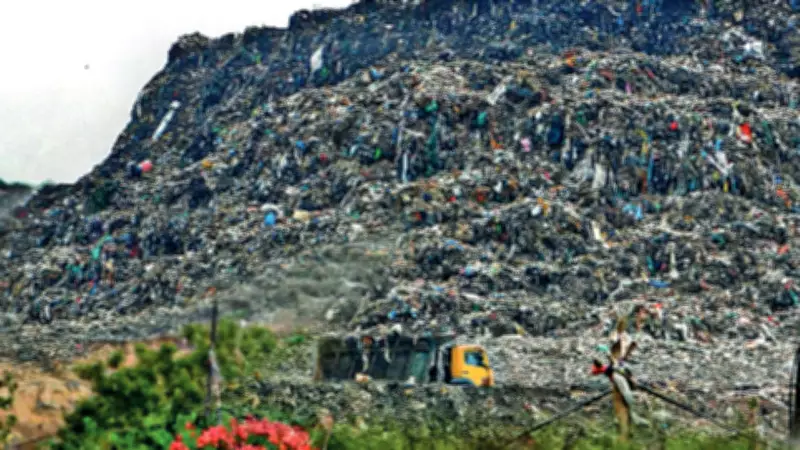
Jawaharnagar Dumpyard: A Global Pollution Hotspot Exposed
For years, scientific warnings have highlighted the environmental catastrophe unfolding at the Jawaharnagar dumpyard in Hyderabad. Now, a groundbreaking study from the University of California has thrust this site into the global spotlight, ranking it among the world's four most polluted dumpyards. An on-ground investigation reveals the harrowing daily reality for residents living in its shadow, where toxic emissions and contamination have become a relentless part of life.
The Overwhelming Onslaught of Pollution
Approaching from nearly four kilometers away, the air thickens with a murky haze. Thick smoke and a pungent, acrid smell create an immediate sense of discomfort and foreboding. Another kilometer reveals the source: a towering, mountainous mound of waste—the Jawaharnagar dumpyard. This facility receives a staggering 9,000 metric tonnes of waste daily from across Hyderabad, making it one of the largest and most problematic waste management sites in India.
The first sensations upon arrival are visceral: a burning throat and an unbearable stench that permeates everything. This odor largely stems from methane emissions, which environmental experts have long flagged as not just unpleasant but extremely dangerous. The University of California study quantifies this threat, showing the dumpyard releases an estimated 5.9 tonnes of methane per hour—equivalent to the pollution caused by one million SUVs on the road.

Methane: A Climate and Health Catastrophe
TV Ramachandra from the energy and wetlands department at the Indian Institute of Science explains the severity: "Methane is 24 times more harmful than carbon dioxide. Large-scale methane emissions from dump sites significantly accelerate climate change, driving faster temperature rise and extreme weather events, apart from their severe impact on human health. Unlike controlled landfills, open dumps release methane directly into the atmosphere, compounding environmental risks and undermining climate mitigation efforts."
Within just an hour at the site, the effects are undeniable—nausea, headaches, and a suffocating feeling overwhelm visitors. For the more than 2,000 residents living in bastis less than 500 meters away, some for up to 15 years, this toxic environment is their daily norm. Inhaling poisonous gases, consuming water contaminated with leachate, and eating produce grown in heavy metal-laden soil has become a routine they cannot escape.
Resident Testimonies: Lives in Peril
B Mallikarjun, who lives in a basti separated from the dumpyard by only a small wall, shares his family's plight: "We have a two-month-old child who falls sick frequently. We are scared she will also go through the same health issues because of the facility. My wife has constant headaches and I have a throat infection. When the stench grows stronger, it leads to vomiting."
One of the most pressing concerns is leachate—a highly toxic liquid formed when water seeps through waste. Mallikarjun points to a five-year-old child with visible skin patches: "It flows into our backyard. The kids in my lane have patches all over their bodies because they play outside and end up coming into contact with the leachate."
Although many households have received Manjeera water supply since 2022, borewell water used for daily chores remains heavily contaminated. A 2022 study in the Journal of the Geological Society of India concluded that nearby surface water bodies have turned into leachate pools, and groundwater in the affected zone is unfit for any use.

Soil Contamination and Broader Impacts
The soil itself is riddled with dangerous heavy metals. A study by Madupoju Srudeepthi and P Manikya Reddy, published in an international journal, found alarming levels of lead, chromium, zinc, cobalt, tin, cadmium, arsenic, and methyl mercury. Anjamma, a 65-year-old resident, recounts the toll: "Over the last two decades, we have seen so many people across age groups die due to pulmonary diseases and other chronic conditions. Most of those still living have a history of respiratory problems, kidney failure, or severe skin allergies." Her eyes well up as she gestures toward homes in her neighbourhood that have witnessed recent deaths.
Beyond the landfill itself, emissions from adjacent waste-to-energy plants exacerbate the crisis. Residents report that ash and chemicals released at high temperatures, along with toxic gases, continue to degrade air quality in surrounding areas. Shelesh Sandeep Raj, a local resident, notes: "There are two waste-to-energy plants, one of 24 MW and another of 12.5 MW run by Re-Sustainability Ltd in collaboration with GHMC. They can process 1,500 metric tonnes daily. The rest piles up." Repeated attempts to contact Re-Sustainability for comment have gone unanswered.
This comprehensive ground report underscores the urgent need for intervention at the Jawaharnagar dumpyard. As it stands, the site not only ranks among the world's worst polluters but also poses a dire threat to the health and well-being of thousands of Hyderabad residents, demanding immediate and sustained action from authorities.