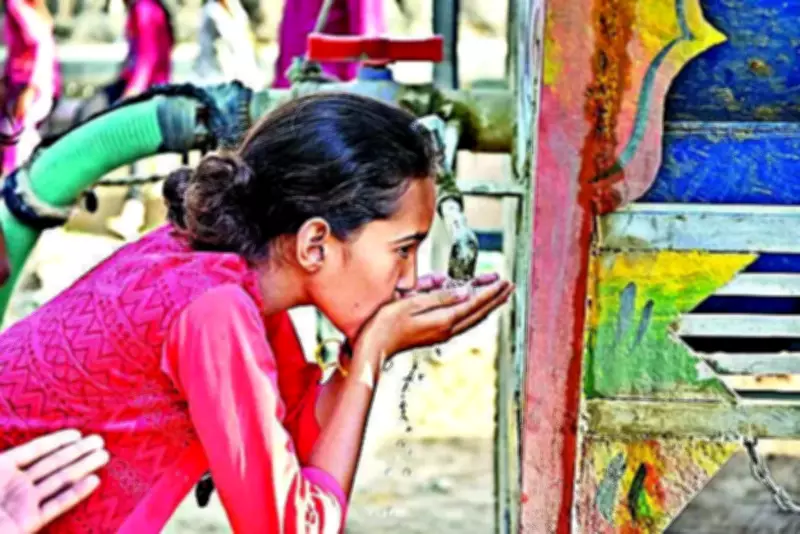
Jaipur is grappling with an acute water crisis as temperatures climb past 40°C, with last-mile localities bearing the brunt. Municipal water supply has become erratic in several areas, driving residents to rely heavily on private tankers, whose prices have surged significantly. In neighborhoods like Siddharth Nagar and Malviya Nagar, supply has been scarce for four to five days, forcing residents to pay nearly double the usual rates for their daily water needs.
Residents Struggle with Rising Costs
Dhruv Agarwal, a resident of Siddharth Nagar, expressed frustration, stating that private tankers are charging twice the normal rate. The spike in demand has made it difficult for many households to secure water at affordable prices. In large residential complexes and high-rises, the situation is particularly dire. Amit Kumar, president of a residents' welfare association, noted that their society requires around four tankers of water daily, each costing Rs 800 previously. Now, suppliers are charging between Rs 1,200 and Rs 1,500 per tanker, putting a strain on household budgets.
Government Response
The Public Health Engineering Department (PHED) has acknowledged the crisis and is responding by increasing the Bisalpur water supply to Jaipur in phases. According to PHED officials, the city is already receiving close to the maximum possible volume of water. Plans are in place to further raise supply from Monday, as the Meteorological Department forecasts higher temperatures in the coming days. The department is working to mitigate the impact of the heatwave on water availability.

Private Tanker Fleet Under Pressure
An official estimate puts Jaipur's private tanker fleet at around 2,000 vehicles, each with a capacity of 4,000 litres. Typically, a tanker serves 10 to 12 households daily, but operators are now receiving over 20 orders per day. This surge in demand has intensified competition and pushed prices upward. The crisis highlights the vulnerability of the city's water infrastructure during extreme weather events, with residents in affected areas bearing the financial and logistical burden.