

Israel's Coordinated Strike on Iranian Gas Field Ignites Regional Conflict
Israeli military forces executed a targeted assault on Iran's crucial South Pars gas field this Wednesday, an operation that three senior Israeli officials have now confirmed was coordinated with United States intelligence and military authorities. This revelation comes despite former President Donald Trump's public assertion that Washington had no prior knowledge of the specific attack.
Contradictory Statements Reveal Complex Coordination
The three Israeli officials, speaking under strict conditions of anonymity to discuss sensitive operational details, disclosed on Thursday that Israel was not surprised by Trump's social media post claiming the United States "knew nothing about this particular attack." They described this dynamic as consistent with previous patterns following Israeli strikes on Iranian fuel depots several weeks earlier, when Pentagon officials similarly distanced themselves from direct involvement while maintaining strategic awareness.
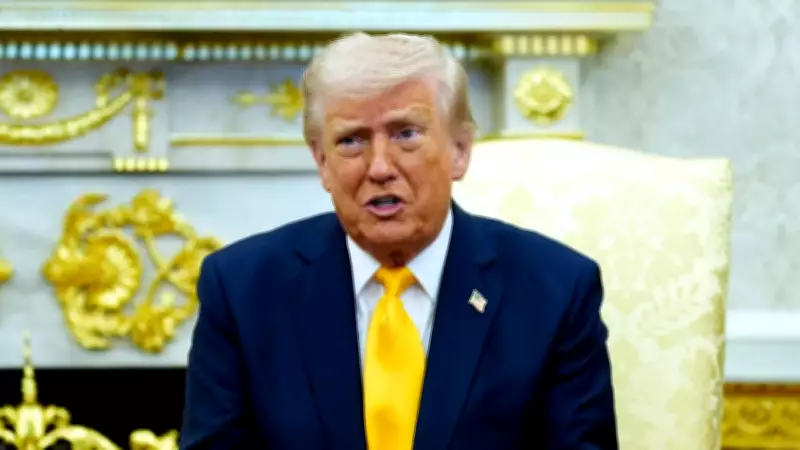
Trump elaborated during a White House briefing, stating he had personally instructed Israeli Prime Minister Benjamin Netanyahu to refrain from further attacks on Iranian gas facilities. "I told him, don't do that, and he won't do that," Trump told assembled reporters. "We get along great. It's coordinated, but on occasion, he'll do something that the United States opposes."

Iranian Retaliation Targets Gulf Energy Infrastructure
The Israeli strike on South Pars, which forms part of a massive natural gas reservoir shared between Iran and Qatar, triggered immediate and significant Iranian retaliation across the Persian Gulf region. Iranian forces launched aerial assaults that caused extensive damage to Qatar's liquefied natural gas facilities, targeted a major refinery in Saudi Arabia, and forced the United Arab Emirates to temporarily shut down critical gas operations.
In his social media response, Trump accused Iran of "unjustifiably and unfairly" retaliating against Qatar's energy infrastructure, despite Qatar being the world's third-largest exporter of liquefied natural gas and having no involvement in the initial Israeli strike. The former president issued a stark warning that "NO MORE ATTACKS WILL BE MADE BY ISRAEL" on South Pars unless Iran targeted Qatar's facilities again, threatening that the United States would then "massively blow up" the oil field.
Gulf Nations Seek Clarification Amid Conflicting Accounts
Following the Iranian counterattacks, Gulf Arab nations urgently sought explanations from the Trump administration regarding the sequence of events. According to a regional source familiar with the diplomatic exchanges, one country contacted United States Central Command directly and was informed that American military authorities had not received advance notification of the Israeli strike.
That same nation then contacted Trump's special envoy Steve Witkoff, who provided a contradictory account indicating that while the operation was not a joint US-Israeli mission, Washington had indeed been informed about it ahead of time. Israel has maintained its standard policy of not publicly acknowledging responsibility for the strike on Iranian territory.
Diverging Strategic Objectives in US-Israeli Alliance
Despite public displays of close coordination in their joint air campaign against Iranian targets, officials from both nations have acknowledged differing strategic priorities. During a House intelligence committee hearing on Thursday, US Director of National Intelligence Tulsi Gabbard clarified that while Israel has primarily focused on "disabling the Iranian leadership," American forces have concentrated their efforts on degrading Iran's ballistic missile capabilities and naval forces.
This incident represents the most significant escalation to date in the ongoing US-Israeli military campaign against Iranian interests across the Middle East, highlighting both the complexities of international alliances and the fragile nature of energy security in one of the world's most strategically vital regions.






