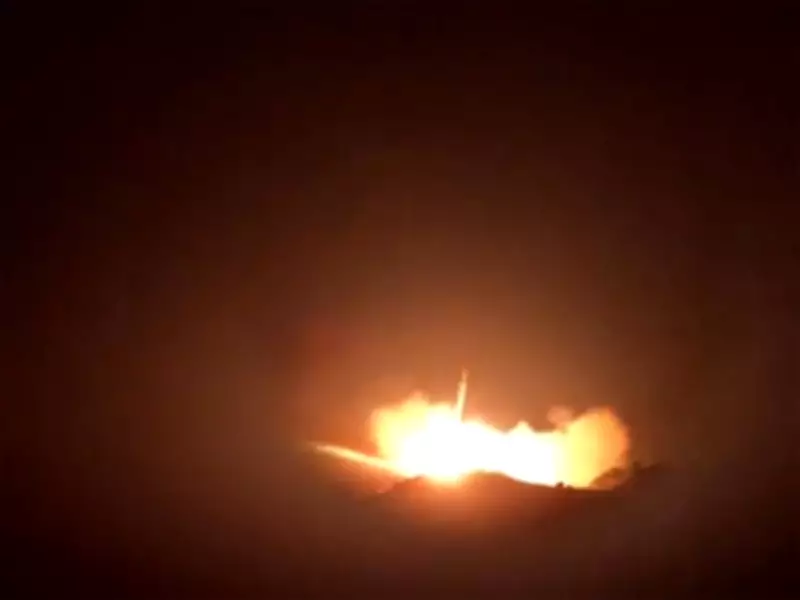
IRGC Escalates Conflict with 78th Wave of Operation True Promise
Iran's Islamic Revolutionary Guard Corps (IRGC) has declared the launch of the 78th wave of its retaliatory campaign, Operation True Promise 4, targeting Israeli and United States military installations across the region. According to reports from Press TV, this latest phase represents a significant escalation in the ongoing conflict, with the IRGC describing it as setting a distinct record in the war's timeline.
Targets and Tactics in the Latest Strikes
The IRGC stated that the operation involved coordinated missile and drone attacks against highly sensitive Israeli locations, including Dimona, Tel Aviv, and Eilat. Dimona, which hosts Israel's nuclear reactor complex, was reportedly struck for the second time in recent days, following an earlier counterstrike that the IRGC claimed resulted in over 200 casualties in Dimona and the nearby city of Arad. The attacks utilized Emad and multi-warhead Qadr missile systems alongside attack drones.
In addition to Israeli targets, several US military bases in the region were also hit during this wave. The IRGC emphasized that these strikes are part of a broader response to what Tehran perceives as attacks against Iran, with the corps asserting it is negotiating with the vile, child-killing aggressors through impact-driven operations.

Escalating Tensions and Regional Impact
The IRGC warned that the situation could intensify further, noting that many of its combat units and millions of members from the Basij volunteer force have not yet been deployed. It cautioned that any attempts by adversaries to offset setbacks or alter the war's course would be met with swift retaliation, promising that Iran's heavy blow would fall in less than an instant on those responsible for aggression.
Operation True Promise 4 reportedly began after Israel and the United States launched what Iran described as a new round of attacks against the country late last month. The IRGC highlighted that the latest strikes coincided with millions of Iranians holding large rallies with clenched fists in support of the government, underscoring domestic backing for the military actions.
Collateral Damage and Power Outages in Kuwait
In a related development, early Tuesday in Kuwait, seven overhead power transmission lines went out of service in several areas due to damage caused by falling shrapnel from air defense systems intercepting incoming threats. According to the Anadolu News Agency, this led to partial power outages in some regions.
The Ministry of Electricity, Water and Renewable Energy in Kuwait, through spokeswoman Fatima Abbas Jawhar Hayat, stated that efforts are underway to restore power as soon as possible. Specialized technical teams are set to assess the damage and repair the affected lines once the sites are secured in coordination with security authorities, adhering to the highest safety standards. Hayat urged citizens and residents to verify information and rely only on official sources for updates.
This incident highlights the broader regional repercussions of the escalating conflict, with infrastructure disruptions affecting civilian populations. As tensions mount, the IRGC's aggressive posture and the ongoing military exchanges continue to pose significant risks to stability in the Middle East.