

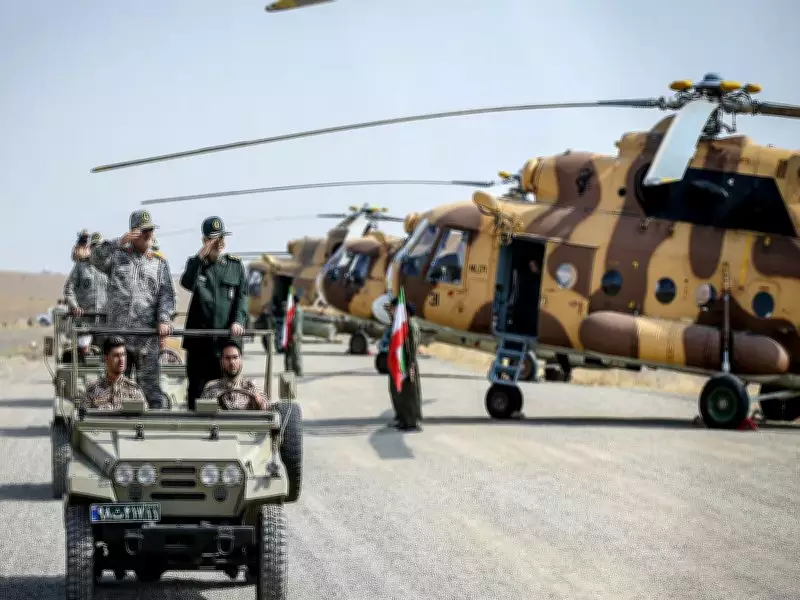
Hardline Factions Within IRGC Tighten Grip on Iran's Military and Diplomatic Levers
A comprehensive new analysis has brought to light a significant shift in Iran's power dynamics, with hardline elements of the Islamic Revolutionary Guard Corps (IRGC) now exercising dominant control over the nation's military and diplomatic frameworks. This development has resulted in the systematic marginalization of moderate factions, reshaping Iran's domestic and international strategies.
Consolidation of Power by IRGC Hardliners
The report details how hardliners within the IRGC have methodically strengthened their influence across critical state institutions. This consolidation is not limited to military affairs but extends deeply into Iran's foreign policy and diplomatic engagements. Key positions in security, defense, and international relations are increasingly occupied by individuals aligned with hardline ideologies, reducing the operational space for more moderate approaches.
This trend marks a departure from periods where moderate voices had some sway in policy discussions, particularly during negotiations such as the 2015 nuclear deal. The current landscape suggests a more unified, hardline stance is being enforced, impacting everything from regional conflicts to global diplomatic interactions.

Implications for Iran's Domestic and Foreign Policy
The sidelining of moderates has profound implications. Domestically, it may lead to stricter enforcement of ideological conformity and reduced tolerance for dissent. In foreign policy, Iran's stance on issues like nuclear negotiations, relations with Western powers, and involvement in regional proxy wars is likely to become more rigid and less open to compromise.
The report underscores that this shift could complicate international efforts to engage with Iran, as hardliners are often skeptical of diplomatic overtures and favor a more confrontational approach.Furthermore, the concentration of power within hardline circles might affect economic policies, with potential repercussions for Iran's already strained economy under international sanctions.
Regional and Global Repercussions
Regionally, the dominance of IRGC hardliners is expected to influence Iran's activities in the Middle East. This includes support for allied groups in countries like Syria, Yemen, and Lebanon, potentially escalating tensions with regional rivals and global powers.
- Increased military assertiveness in the Persian Gulf and beyond.
- Stricter adherence to anti-Western rhetoric in diplomatic communications.
- Possible hardening of positions in ongoing nuclear talks.
Globally, this development could alter the calculus for nations seeking to negotiate with Iran, as the reduced influence of moderates might limit opportunities for dialogue and de-escalation.
Background and Context
The IRGC, established after the 1979 Iranian Revolution, has long been a powerful entity within Iran, with significant control over military and economic sectors. However, internal factions have historically vied for influence. The current report highlights a tipping point where hardliners have gained the upper hand, sidelining more pragmatic elements that previously advocated for engagement with the international community.
This shift is seen as part of broader trends in Iranian politics, where conservative forces have strengthened their hold in recent years, affecting everything from social policies to international relations.
In summary, the report paints a picture of an Iran where hardline IRGC factions are firmly in control of military and diplomatic levers, with moderates pushed to the sidelines. This realignment is likely to shape Iran's trajectory in the coming years, with significant implications for regional stability and global diplomacy.






