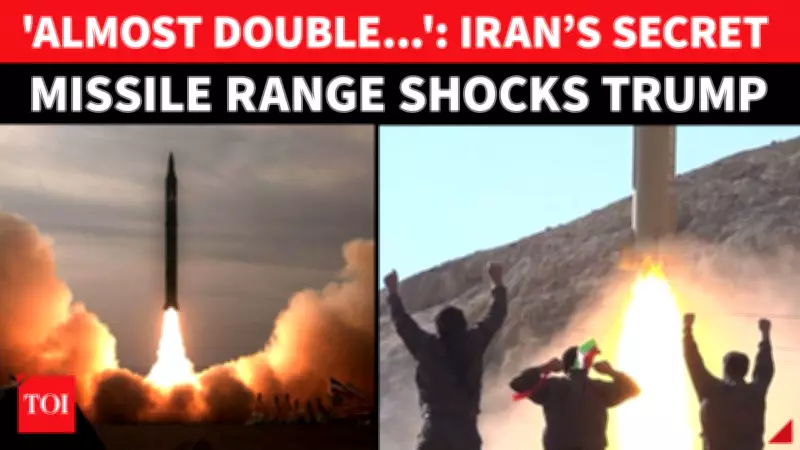
Iran's Secret Missile Reach Exposed in Diego Garcia Strike Attempt
In a development that has sent shockwaves through global defense circles, Iran's attempted missile strike on the strategic US-UK military base at Diego Garcia has raised profound questions about Tehran's true military capabilities. The incident, which occurred recently, suggests Iran may possess undeclared long-range missile systems far beyond its officially stated limits.
Beyond Official Range Limits
Iran has officially capped its missile range at 2,000 kilometers, a restriction it has publicly maintained for years. However, the Diego Garcia base is located nearly 4,000 kilometers from Iranian territory, making this attempted strike a significant departure from declared capabilities. This discrepancy has led defense analysts to conclude that Iran may have been developing and concealing advanced long-range missile technology.
The Attack Attempt Details
Reports indicate that Iran launched two missiles toward the Diego Garcia facility. One missile reportedly failed during flight, while the other was successfully intercepted by defense systems. Despite the technical failures, the mere attempt to strike a target at such distance has created alarm among military planners in Washington, London, and allied capitals worldwide.

Military analysts suggest that Iran's ambiguous missile capabilities may be a deliberate strategic choice. By keeping adversaries uncertain about its true reach and technological sophistication, Tehran maintains a psychological advantage and complicates defense planning against potential Iranian threats.
Global Defense Implications
This incident signals a significant expansion of the potential conflict zone beyond the Middle East. Diego Garcia, located in the Indian Ocean, has long been considered a secure rear-area base for US and UK operations. The successful targeting of this facility, even in an intercepted attempt, forces Western powers to reconsider their missile defense strategies and threat assessments.
The United States and United Kingdom now face urgent questions about how to defend against potential Iranian threats to distant bases and allies. This development may trigger accelerated investments in missile defense systems and intelligence gathering focused on Iran's weapons programs.
Regional and Global ConsequencesThe attempted strike comes amid heightened tensions in the Middle East and represents a bold demonstration of Iran's willingness to project power far beyond its immediate neighborhood. This action may influence ongoing diplomatic efforts and military posturing throughout the region, potentially altering calculations among both allies and adversaries of the Islamic Republic.
As defense officials analyze the technical data from the intercepted missile, the international community watches closely for indications of how Iran's revealed capabilities might reshape security dynamics in multiple theaters of potential conflict.