

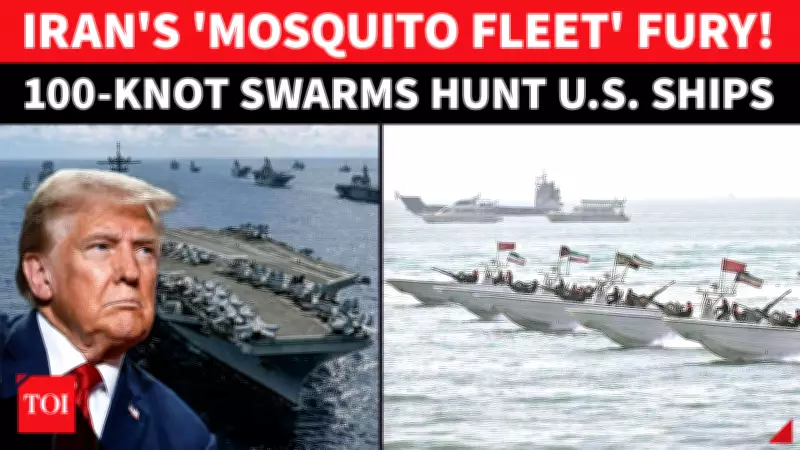
Iran's 'Mosquito Fleet' Strategy Heightens Naval Standoff in Strait of Hormuz
In a dramatic escalation of maritime tensions, Iran has once again closed the Strait of Hormuz, shortly after reopening it, as confrontations with the United States intensify. This move comes in response to an American blockade of Iranian ports, implemented despite a temporary truce, pushing the region to the brink of a potential naval conflict.
The 'Mosquito Fleet': Iran's Asymmetric Naval Warfare Tactic
At the heart of Iran's latest strategy is what reports describe as a "Mosquito Fleet"—a network of small, agile, and high-speed attack boats. Unlike traditional naval vessels designed for direct combat, these boats are engineered to create chaos and overwhelm larger warships through sheer numbers and unpredictability.
This asymmetric approach leverages Iran's geographical advantages in the narrow waters of the Strait of Hormuz, where massive US warships may struggle to maneuver against swarms of smaller, faster craft. The tactic is seen as a cost-effective way to challenge American naval superiority without engaging in conventional battles.

Background: US-Iran Tensions and the Strait of Hormuz
The Strait of Hormuz is a critical chokepoint for global oil shipments, with about one-fifth of the world's petroleum passing through its waters. Iran's repeated closures and threats in this area have long been a flashpoint in its relations with the US and its allies.
The recent US blockade of Iranian ports, enacted during a fragile truce, has exacerbated hostilities, leading to this latest show of force. Analysts suggest that Iran's deployment of the Mosquito Fleet is a calculated response, aimed at demonstrating its capability to disrupt international shipping and challenge US military presence in the region.
Implications for Regional Security and Global Trade
The use of such swarm tactics raises significant concerns for maritime security and stability in the Persian Gulf. Key implications include:
- Increased risk of accidental clashes: The presence of numerous small boats near US warships heightens the potential for miscalculations or unintended engagements.
- Disruption to oil markets: Any prolonged closure of the Strait of Hormuz could spike global oil prices, impacting economies worldwide.
- Strategic challenges for the US Navy: Countering swarm attacks requires specialized tactics and equipment, potentially straining US naval resources in the region.
This development underscores the volatile nature of US-Iran relations, with both sides testing each other's limits in a high-stakes geopolitical game. As tensions simmer, the international community watches closely, hoping for de-escalation to avoid a broader conflict that could have far-reaching consequences.






