Iran's Suspected Missile Test at Diego Garcia Sparks Global Defense Alarm
In a development that has sent shockwaves through international security circles, Iran is suspected of testing hidden missile technology during a recent strike attempt on the strategic Diego Garcia military base. This incident, occurring on March 22, 2026, has raised profound questions about Tehran's military capabilities and its strategic intentions on the global stage.
Space-Launch Technology: A Game-Changer in Missile Range
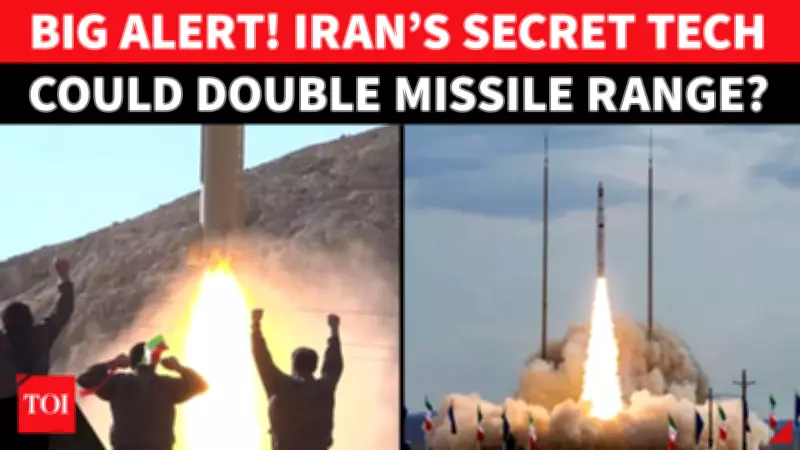
Defense analysts are particularly alarmed by Iran's potential leveraging of its Simorgh space launch vehicle technology to extend missile ranges far beyond official limits. While Iran has publicly capped its missile ranges at 2,000 kilometers, experts suggest this technology could push operational reach to approximately 4,000 kilometers. This represents a significant expansion of strategic threat zones, potentially putting previously secure regions within striking distance.
The dual-use nature of space programs has become a critical concern for global security agencies. The overlap between civilian space exploration initiatives and ballistic missile development creates ambiguity that nations like Iran can exploit for military advancement. This blurring of lines between peaceful and offensive technologies complicates international monitoring and response mechanisms.

Accuracy Trade-Offs and Strategic Implications
Military specialists note that while extended-range systems utilizing space-launch technology may sacrifice some precision compared to conventional ballistic missiles, the sheer expansion of reach creates new strategic realities. The ability to threaten targets thousands of kilometers away fundamentally alters defense calculations for nations worldwide.
This technological advancement is viewed by security experts as a calculated demonstration of strength and defiance. By potentially surpassing acknowledged capabilities, Iran challenges existing assessments by global powers, particularly the United States and United Kingdom, forcing them to reconsider defense postures and regional security frameworks.
Global Response and Future Security Landscape
The Diego Garcia incident has triggered urgent reassessments in defense ministries across multiple nations. Key implications include:
- Revised threat assessments for military installations previously considered outside Iranian missile range
- Increased scrutiny of space program developments in nations with ballistic missile ambitions
- Potential acceleration of missile defense system deployments in vulnerable regions
- Renewed diplomatic efforts to address dual-use technology proliferation concerns
As defense experts analyze the full implications of this development, one consensus emerges: the traditional boundaries of missile threat zones are being redrawn, with potentially far-reaching consequences for global security architecture. The incident serves as a stark reminder that in an era of rapid technological advancement, no location can be considered entirely safe from emerging threats.