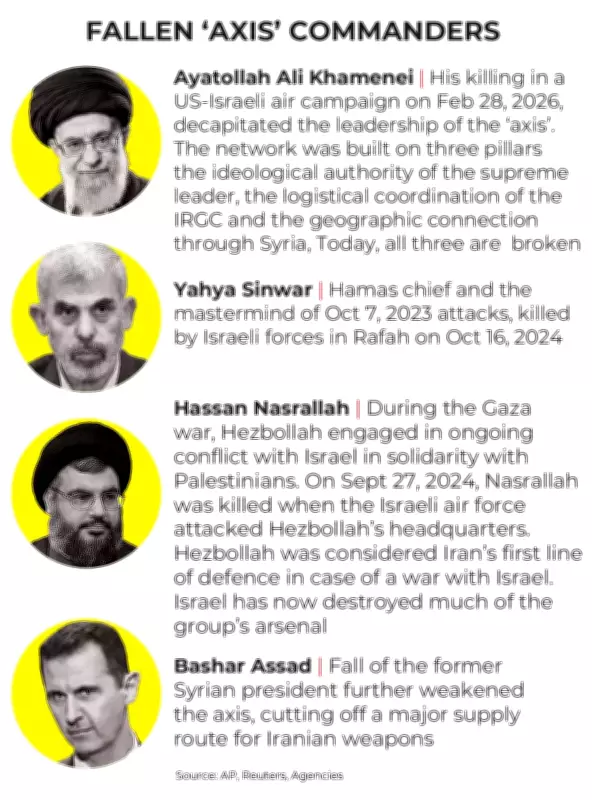
Iran's Axis of Resistance: A Strategic Network Under Threat
For decades, Iran has meticulously constructed a powerful network of proxy groups and allies across the Middle East, known as the Axis of Resistance. This strategic initiative aimed to extend Tehran's influence and counter regional adversaries, primarily Israel and the United States. However, recent military strikes by Israel and the US have placed this formidable axis at a critical crossroads, potentially signaling its end.
The Foundation of the Axis
The Axis of Resistance was not built overnight. It emerged from Iran's revolutionary ideology following the 1979 Islamic Revolution, which sought to export its Shia Islamist principles. Key components include Hezbollah in Lebanon, various Shia militias in Iraq, the Houthi movement in Yemen, and support for Hamas in Gaza. These groups received financial aid, military training, and weapons from Iran, creating a decentralized but coordinated force.
This network allowed Iran to project power without direct confrontation, enabling it to influence conflicts from Syria to Yemen. The axis served as a deterrent against Israeli and US actions, complicating military strategies in the region. Over time, it became a cornerstone of Iran's foreign policy, bolstering its status as a regional power.

Recent Strikes and Their Impact
In recent months, Israel and the United States have intensified their military operations against Iranian-backed entities. Israeli airstrikes have targeted Hezbollah positions in Lebanon and Iranian assets in Syria, while US forces have conducted strikes against Shia militias in Iraq and Syria. These actions have inflicted significant damage on the infrastructure and capabilities of the Axis of Resistance.
The precision and scale of these strikes have disrupted supply chains and command structures, weakening the cohesion of the axis. For instance, key leaders and facilities have been hit, reducing the operational effectiveness of groups like Hezbollah and Iraqi militias. This has raised questions about the sustainability of Iran's proxy strategy in the face of advanced military technology.
Potential Collapse and Regional Implications
If the Axis of Resistance is indeed dismantled, the repercussions for the Middle East could be profound. Iran's ability to exert influence through proxies would diminish, potentially altering the balance of power. Israel and the US might gain a strategic advantage, reducing threats from non-state actors aligned with Tehran.
- Increased stability in conflict zones like Syria and Yemen could follow, as Iranian support wanes.
- Regional allies of Iran, such as Syria and Lebanon's Hezbollah, might face isolation or internal challenges.
- The shift could pave the way for new diplomatic initiatives or heightened tensions, depending on Iran's response.
However, Iran is unlikely to abandon its ambitions easily. It may seek to rebuild or adapt its strategies, possibly through cyber warfare or enhanced alliances with other global powers. The future of the Axis of Resistance remains uncertain, but its current vulnerability marks a pivotal moment in Middle Eastern geopolitics.
Conclusion
The Axis of Resistance, once a symbol of Iran's regional prowess, now faces an existential threat from coordinated Israeli and US strikes. Its potential end could reshape the Middle East, offering opportunities for peace or new conflicts. As developments unfold, the world watches closely to see if this era of proxy warfare is truly over.