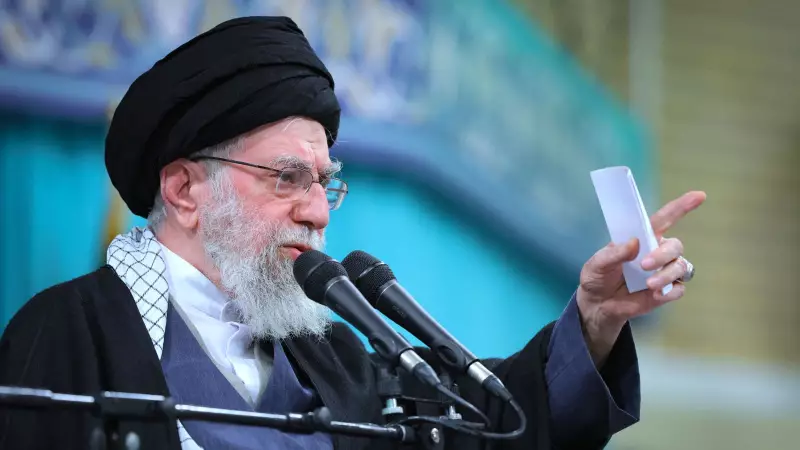
Iran's President Issues Stark Warning to the United States
Iran's President Ebrahim Raisi has delivered a strong message to the United States. He warned that any attack on Iran's Supreme Leader, Ayatollah Ali Khamenei, would lead to a full-scale war. This statement comes amid rising tensions between the two nations.
Raisi's Direct Statement on Potential Conflict
President Raisi made this declaration clearly and firmly. He emphasized that targeting Khamenei is a red line for Iran. The Iranian leader stressed that such an action would not go unanswered. Instead, it would provoke a massive military response from Iran.
Raisi explained that Iran views any threat to its leadership as a serious matter. He stated that the country is prepared to defend itself at all costs. This warning highlights the high stakes in the current geopolitical climate.

Context of Rising Tensions
Relations between Iran and the United States have been strained for years. Recent events have only increased the friction. Both countries have engaged in verbal sparring and military posturing.
Iran has faced various pressures from the US, including economic sanctions. These measures have impacted Iran's economy and its people. In response, Iranian officials have often issued strong statements against US policies.
The warning from Raisi adds to this ongoing tension. It serves as a reminder of the potential for escalation in the region. Many observers are watching the situation closely for any signs of conflict.
Implications for Regional Stability
A full-scale war between Iran and the United States would have far-reaching consequences. The Middle East is already a volatile area with multiple conflicts. Adding another major war could destabilize the region further.
Neighboring countries might get drawn into the conflict. Global oil supplies could be disrupted, affecting economies worldwide. The human cost would also be significant, with potential loss of life and displacement.
Raisi's warning underscores the need for diplomatic efforts. Both sides must consider the risks before taking any aggressive actions. Dialogue and negotiation could help prevent a disastrous outcome.
Iran's Preparedness and Defense Strategy
Iran has a large military and various defense capabilities. The country has invested in its armed forces over the years. It also has allies in the region that might support it in a conflict.
Raisi's statement suggests that Iran is confident in its ability to respond. He likely aims to deter any potential attacks by showing resolve. This strategy is common in international relations to prevent adversaries from acting.
However, such warnings also carry the risk of miscalculation. If either side misinterprets the other's intentions, it could lead to unintended conflict. Both Iran and the US must communicate clearly to avoid misunderstandings.
International Reactions and Next Steps
The international community is likely to take note of Raisi's warning. Other countries may call for calm and restraint. They might urge both Iran and the US to engage in talks to reduce tensions.
In the coming days, we can expect more statements from both sides. The US government may respond to Raisi's comments. How it does so will be crucial in determining the future course of events.
For now, the situation remains tense but not yet explosive. Observers hope that cooler heads will prevail. The goal should be to find peaceful solutions to the disputes between Iran and the United States.