

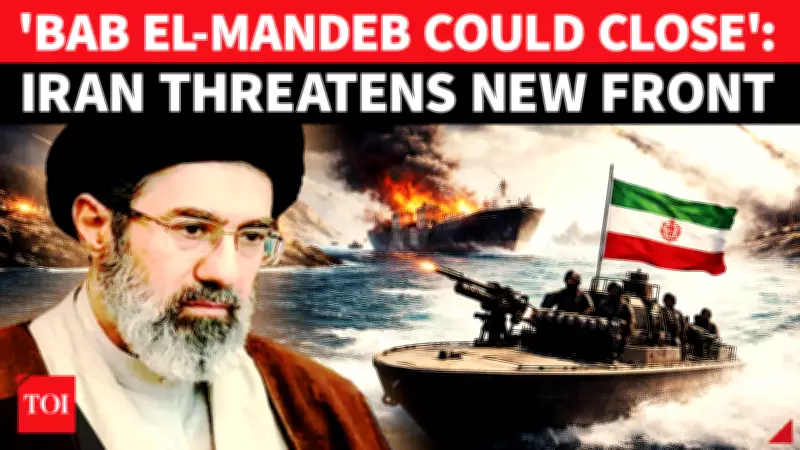
Iran Issues Warning Over Bab el-Mandeb Strait Closure
In a significant escalation of regional tensions, Iran has threatened to expand its maritime confrontation beyond the Strait of Hormuz, with a new warning targeting the strategically vital Bab el-Mandeb Strait. This development follows ongoing disputes involving the United States and Israel, raising alarms about potential disruptions to global energy supplies and trade routes.
Strategic Threat to Critical Maritime Passage
A military source, cited by Iran's semi-official Tasnim News Agency, declared that if foreign forces continue military strikes near Iranian territory or attempt to exert naval pressure on Tehran, Iran could open "surprise" fronts as a countermeasure. The Bab el-Mandeb Strait, linking the Red Sea and the Gulf of Aden, is a crucial chokepoint for international shipping, handling a substantial portion of the world's oil and liquefied natural gas shipments.
Any closure or significant disruption at Bab el-Mandeb could have severe repercussions for global economic stability and energy security, potentially triggering price volatility and supply chain bottlenecks. The strait serves as a primary artery for vessels traveling between the Mediterranean Sea and the Indian Ocean, making it indispensable for trade between Europe, Asia, and Africa.

Context of Rising Geopolitical Tensions
This warning comes amid heightened friction in the Middle East, where Iran has been involved in various confrontations with Western powers and regional rivals. The threat to Bab el-Mandeb represents a strategic broadening of Iran's maritime posture, moving beyond the already tense situation at the Strait of Hormuz—another key passageway for oil exports from the Persian Gulf.
Analysts suggest that Iran's declaration is aimed at deterring further military actions by the U.S. and Israel, while also signaling its capability to impact global trade if pressured. The move underscores the delicate balance of power in the region, where naval blockades or conflicts in such chokepoints could escalate into broader international crises.
Implications for Global Trade and Security
The potential shutdown of Bab el-Mandeb poses significant risks:
- Economic Impact: Disruptions could lead to increased shipping costs, delays in cargo deliveries, and higher insurance premiums for vessels traversing the area.
- Energy Security: With a large share of global oil and LNG passing through, any interference might strain energy markets, affecting prices worldwide.
- Security Concerns: Increased military presence or conflicts in the strait could heighten risks of accidental clashes or targeted attacks on commercial ships.
This development highlights the interconnectedness of geopolitical strife and global commerce, where actions in one region can ripple across international economies. Stakeholders, including governments and shipping companies, are likely monitoring the situation closely for any signs of escalation.
In summary, Iran's threat to shut down the Bab el-Mandeb Strait marks a pivotal moment in Middle Eastern geopolitics, with far-reaching consequences for maritime security and worldwide trade dynamics. As tensions simmer, the international community faces the challenge of navigating these turbulent waters to prevent a full-blown crisis.






