

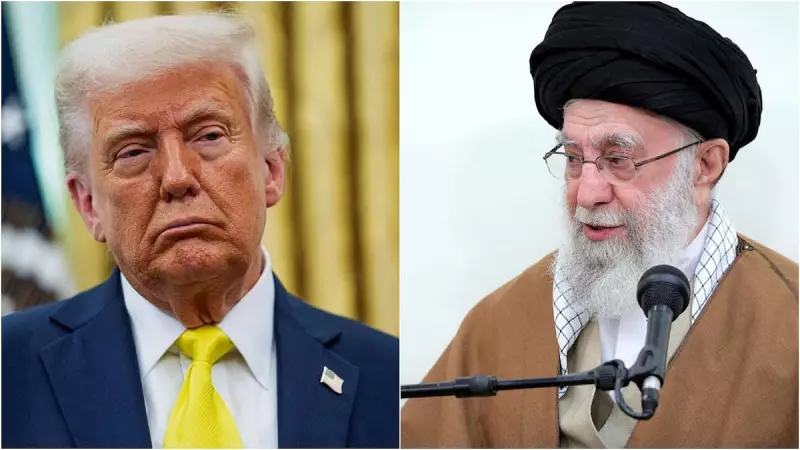
Iran Issues Warning to Strike US Military Bases in the Region
Iran has issued a direct threat to target American military bases across the Middle East. This warning comes as a response to potential attacks from Washington. The situation has escalated rapidly in recent days.
Trump's Comments Spark Fresh Tensions
US President Donald Trump told Iranians to continue their protests. He declared that help is on the way for them. These remarks have angered Iranian officials. They view this as interference in their internal affairs.
The Iranian government sees Trump's statement as a provocation. It has prompted them to issue this stark warning. Military leaders in Iran are now on high alert.

Washington's Military Presence in the Middle East
The United States maintains a significant military footprint in the Middle East. This includes numerous bases and facilities. Key locations are spread across several countries.
- Qatar: Al Udeid Air Base serves as a critical hub for US operations.
- Bahrain: The Navy's Fifth Fleet is headquartered here.
- Kuwait: Camp Arifjan supports thousands of American troops.
- United Arab Emirates: Al Dhafra Air Base hosts advanced aircraft.
- Iraq: Several bases remain active despite recent drawdowns.
These installations provide strategic advantages for Washington. They enable rapid response capabilities across the region. Iran's threat specifically targets these assets.
Potential Implications of an Iranian Strike
An attack on US bases would have severe consequences. It could trigger a broader military conflict. Regional stability would be at risk.
American forces are prepared to defend their positions. They have advanced missile defense systems in place. However, Iran possesses a range of ballistic missiles.
These missiles could reach many US bases in the area. The Iranian military has conducted numerous tests in recent years. Their accuracy and range have improved significantly.
Historical Context of US-Iran Relations
Tensions between the United States and Iran are not new. They have simmered for decades. The 1979 Iranian Revolution marked a turning point.
Since then, relations have been largely hostile. Nuclear negotiations have failed to ease the strain. Sanctions and military posturing continue to define the relationship.
Trump's latest comments add another layer of complexity. They come at a time of domestic unrest in Iran. Protesters have taken to the streets in various cities.
International Reactions and Next Steps
Other countries are watching the situation closely. Allies in the Middle East are concerned about escalation. They rely on American protection against regional threats.
European nations may urge diplomatic solutions. They have previously tried to mediate between the two sides. However, their influence appears limited now.
The coming days will be crucial. Both sides must decide whether to de-escalate or prepare for confrontation. Military analysts warn of miscalculations leading to war.
Iran's warning serves as a clear message to Washington. It underscores the high stakes involved. The world waits to see how the United States will respond.






