

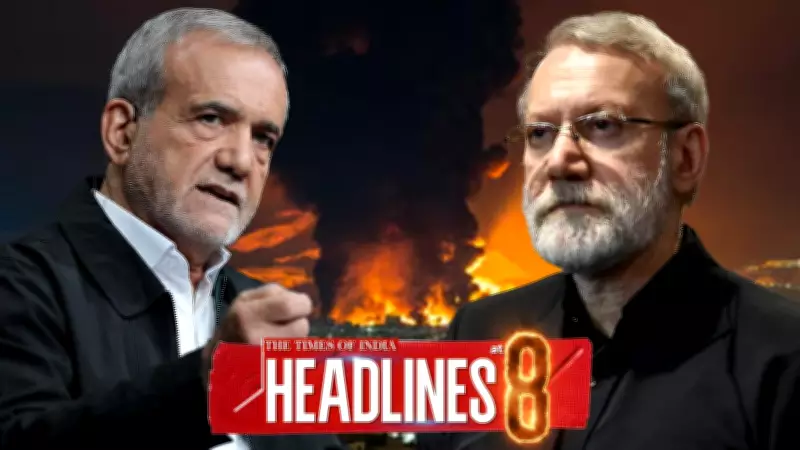
Iran's National Security Chief Ali Larijani Killed in Tehran Strike, Foreign Minister Pledges Stability
In a dramatic and explosive escalation of tensions in West Asia, Ali Larijani, Iran's National Security Chief, has been assassinated in a targeted strike in Tehran. The incident, confirmed by Iranian officials, has sent shockwaves across the region, raising immediate fears of a broader conflict. Despite the high-profile killing, Iran's Foreign Minister has publicly declared that the event "will not destabilize Tehran", emphasizing the resilience of the Iranian political system.
Regional Fallout and International Reactions
The assassination of Larijani, a key figure in Iran's security apparatus, has triggered a volatile response from the United States. Reports indicate that US bunker-buster bombs have been deployed near the strategic Strait of Hormuz, a critical chokepoint for global oil shipments. This military action has further inflamed the situation, with NATO allies notably refusing to provide support, isolating the US stance and amplifying regional anxieties.
Simultaneously, the political landscape in Washington has been rocked by internal discord. Joe Kent, a prominent figure, has resigned from his position, launching a scathing critique of the ongoing war efforts. His departure has prompted a sharp rebuttal from former President Donald Trump, who fired back with strong rhetoric, highlighting the domestic political fractures amidst the international crisis.

Broader Implications for Global Stability
The killing of Ali Larijani is not an isolated incident but a pivotal moment that could redefine geopolitical dynamics. Analysts warn that the combination of:
- A high-level assassination in Iran
- Aggressive US military posturing
- Lack of NATO cohesion
- Domestic US political turmoil
creates a perfect storm for potential escalation. The Foreign Minister's assurance of stability is seen as a crucial attempt to prevent internal panic and external exploitation, but the volatile mix of factors suggests that the region is on a knife's edge.
As tensions explode, the international community watches with bated breath, concerned that any miscalculation could spiral into a wider war, with devastating consequences for global security and energy markets. The coming days will be critical in determining whether diplomacy can prevail or if West Asia is headed toward a new, more dangerous phase of conflict.






