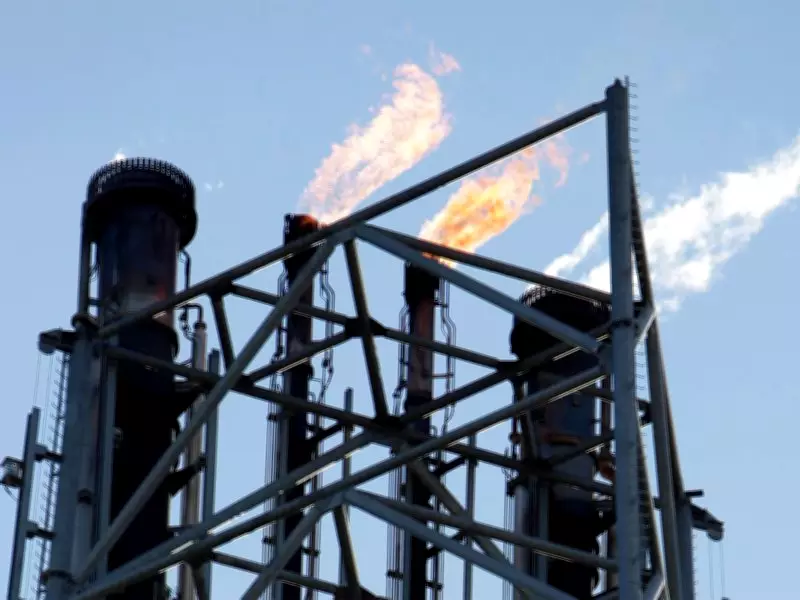
Iran's State Media Insists Kharg Island Operations Unaffected by US Military Strikes
In a recent development, Iranian state media, specifically the Islamic Republic of Iran Broadcasting (IRIB), has publicly declared that the situation on Kharg Island remains normal and under control. This statement comes in the wake of targeted US airstrikes that reportedly focused on military infrastructure located on the island, which is a critical hub for Iran's oil export terminals.
US Claims of Destruction and Iranian Counterclaims
According to a video released by IRIB on Thursday, operations at the plant are currently proceeding without disruption. This assertion directly contradicts earlier remarks made by former US President Donald Trump, who stated on Monday that the US had "destroyed Kharg Island in Iran, except for areas where the oil is." Trump elaborated, "We attacked Kharg Island and knocked it. We destroyed everything on the island except for the area where the oil is. We left the pipes. We didn't want to do that, but we will do that."
He further emphasized the strategic objective, saying, "But for purposes of someday rebuilding that country, I guess we did the right thing... We are aggressively dismantling Iran's defence industrial base, and its ability to rebuild its missiles and drone capability is getting close to zero. We're hammering their capacity to threaten commercial shipping in the Strait of Hormuz with more than 30 mine-laying ships destroyed."

Reports of Limited Damage and Regional Retaliation
Press TV, an Iranian news outlet, has reported that the US strikes did not impact Iranian energy infrastructure but caused significant damage to military sites on the two islands. This claim aligns with IRIB's portrayal of normalcy in oil operations.
Simultaneously, the conflict has escalated regionally. Earlier today, Qatar's Ras Laffan Industrial City, the world's largest liquefaction facility, was struck by ballistic missiles from Iran, resulting in extensive damage, as confirmed by Qatar's Ministry of Defence. This attack marks the second assault on this critical energy site.
QatarEnergy has issued a statement confirming that several of its Liquefied Natural Gas (LNG) facilities were targeted in missile attacks in the early hours of Thursday. The statement detailed, "In addition to the previous attack on Ras Laffan Industrial City on Wednesday that resulted in extensive damage to the Pearl GTL (Gas-to-Liquids) facility, QatarEnergy confirms that in the early hours of Thursday, several of its Liquefied Natural Gas (LNG) facilities were the subject of missile attacks, causing sizeable fires and extensive further damage. Emergency response teams were deployed immediately to contain the resulting damage with no reported casualties."
Background and Economic Implications
These retaliatory strikes from Iran are believed to be in response to an earlier Israeli attack on Iran's South Pars Gas field. The series of assaults on key energy infrastructure in both Iran and Qatar has led to a sharp increase in global energy prices, with analysts indicating little immediate prospect for a resolution to the ongoing conflict.
The situation underscores the volatile nature of regional tensions and their direct impact on international energy markets, as both nations play pivotal roles in global oil and gas supply chains.