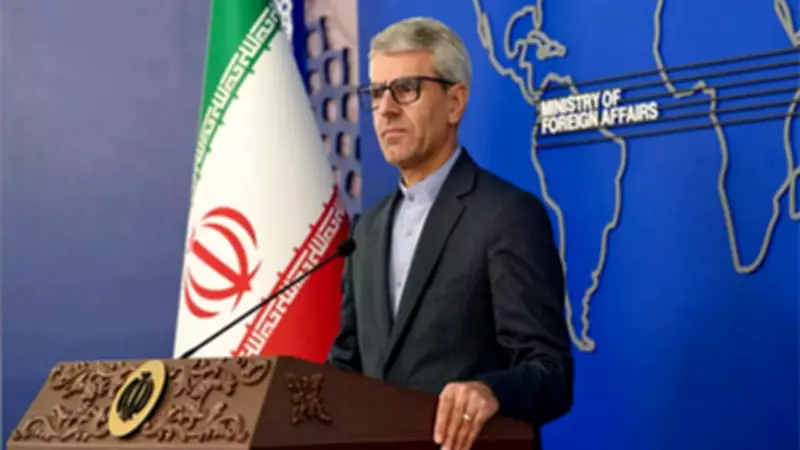
Iran Firmly Rejects Ceasefire Possibility Amid Escalating Hostilities
Iran has categorically ruled out any possibility of a ceasefire as hostilities continue to intensify across the region. Foreign Ministry spokesperson Esmaeil Baghaei made this clear declaration, emphasizing that Tehran's focus will remain exclusively on defense and retaliatory measures for as long as attacks against the country persist.
Defense and Retaliation as Sole Priorities
Speaking to Iran's Student News Network, Baghaei articulated Iran's unwavering position. "There is no point in talking about anything but defense and crushing retaliation against enemies," he stated firmly. The spokesperson stressed that Iran would continue to defend itself vigorously while the strikes against its territory and interests continue unabated.
Baghaei elaborated on Iran's strategic approach, noting that Tehran would maintain its targeting of facilities used by what it identifies as aggressors. At the same time, he emphasized Iran's commitment to avoiding direct confrontation with neighboring Muslim states. "Iran has no war to fight with its Muslim neighbors," Baghaei reiterated, positioning Tehran's operations as specifically aimed at sites utilized by hostile forces rather than regional allies.

Denial of Regional Attacks and Allegations of False Flags
The Iranian spokesperson categorically denied allegations that Iran had launched attacks against Turkey, Azerbaijan, and Cyprus. Instead, Baghaei characterized such incidents as "false flag attacks" deliberately orchestrated to frame Tehran and escalate tensions throughout the region. According to his statements, these purported incidents represent calculated attempts to manipulate regional dynamics against Iran's interests.
Baghaei further accused the United States of pursuing broader strategic objectives against Iran, including:
- Targeting Iran's valuable oil resources
- Seeking to weaken Iran's economic and political stability
- Potentially attempting to fragment the country through sustained pressure
He framed Washington's actions as part of a comprehensive campaign to undermine Iran's sovereignty and regional standing.
Presidential Apology and Conditional Restraint
In a significant development, Iranian President Masoud Pezeshkian issued a formal apology on Saturday for Iran's recent strikes on neighboring countries allied with the United States. This apology came as the conflict in West Asia entered its second week of heightened tensions and military exchanges.
During a speech broadcast on state television, Pezeshkian expressed regret for the strikes and clarified Iran's intentions. "I must apologize on my own behalf and on behalf of Iran to the neighboring countries that were attacked by Iran," the president stated. He emphasized that Iran had never intended to target nearby nations and that the strikes represented exceptional circumstances rather than established policy.
According to reports from AFP, Pezeshkian revealed that Iran's interim leadership council had reached an important decision regarding future military actions:
- No further attacks will be conducted against neighboring countries
- No missiles will be fired toward neighboring territories
- These restrictions apply unless an attack on Iran originates from those countries
This conditional framework establishes clear parameters for Iran's future military engagements with neighboring states while preserving Tehran's right to self-defense.
Regional Context and Ongoing Tensions
The statements from Iranian officials emerge against a backdrop of persistently high tensions throughout West Asia. Missile and drone exchanges continue to occur across parts of the Gulf and neighboring regions, creating an atmosphere of uncertainty and potential escalation.
Iran has consistently characterized its military actions as retaliatory measures taken in direct response to attacks and sustained pressure from its adversaries. This framing positions Tehran's activities as defensive rather than aggressive, though regional actors and international observers continue to debate this characterization.
The conflict dynamics involve multiple layers of complexity, including:

- Direct engagements between Iran and Israel
- Broader regional implications involving multiple state and non-state actors
- International dimensions with significant U.S. involvement
- Economic considerations related to oil resources and regional stability
As the situation continues to evolve, Iran's dual approach of firm retaliation against perceived aggressors combined with diplomatic outreach to neighboring Muslim states represents a carefully calibrated strategy. The apology from President Pezeshkian, while significant, does not signal a broader retreat from Iran's defensive posture or its commitment to respond to attacks against its territory and interests.