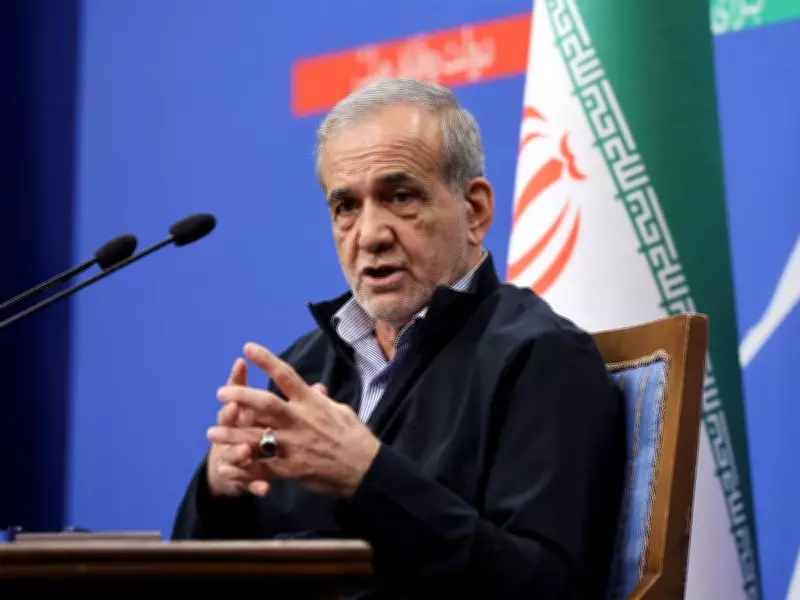
Iranian President Calls for US Exit to Ensure West Asia Security
In a stark declaration on social media, Iranian President Masoud Pezeshkian has stated that the United States must withdraw from West Asia to achieve regional security. This comes as tensions in the Gulf continue to intensify, with recent incidents highlighting the volatile situation.
Escalating Conflict and Strategic Attacks
The conflict in West Asia has expanded, involving the US, Israel, and Iran targeting each other's energy assets, which threatens global oil and gas supplies. On Saturday, a drone strike hit the Fujairah Port in the UAE, causing a fire from debris after successful interception by UAE air defenses. No injuries were reported, but the incident underscores the urgent need to prevent further escalation.
A Gulf analyst noted that the targeting of the UAE reflects its strategic importance in regional commerce, diplomacy, and financial flows, rather than any weakness. Meanwhile, Iran's Islamic Revolutionary Guard Corps (IRGC) has warned that attacks on American bank branches in the Gulf could expand if US and Israeli strikes continue to target Iranian banking infrastructure.

Impact on Maritime Security and Human Toll
According to reports, at least 17 vessels have been attacked in key Middle East shipping lanes over the past two weeks, including areas like the Persian Gulf, Strait of Hormuz, and Gulf of Oman. These attacks have resulted in at least one casualty, an Indian national, as confirmed by UKMTO and India's embassy in Oman.
The current confrontation began on February 28 with US-Israeli airstrikes that killed senior Iranian officials. Since then, Iranian forces have launched daily missile and drone operations targeting Israeli-held territories and US military bases across the region.
President Pezeshkian's message, "For the region to be secure, the United States should not be there," encapsulates Iran's stance amid these growing hostilities. As the situation unfolds, the international community watches closely, concerned about the broader implications for global stability and energy markets.