

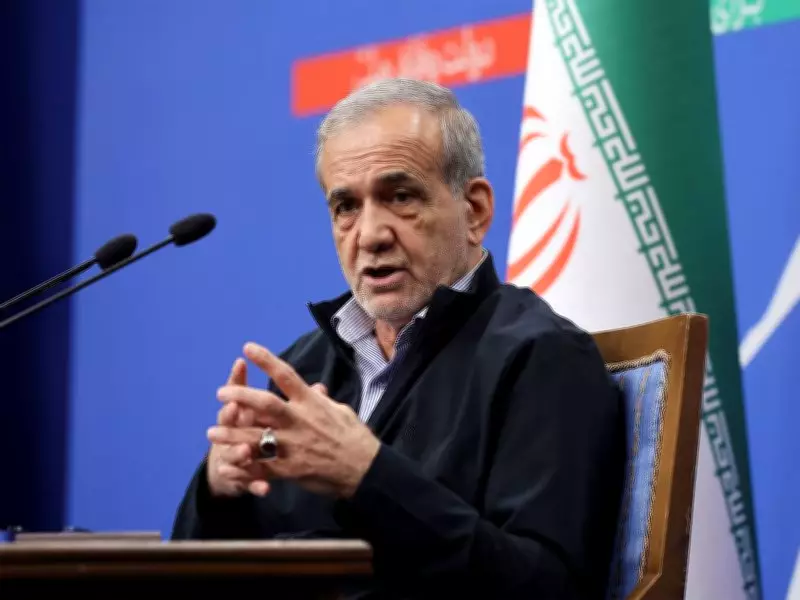
Iranian President Credits Public Resolve for Compelling Aggressor Withdrawal in Warfare
In a recent address, Iranian President Masoud Pezeshkian underscored the critical role of popular determination in military conflicts, asserting that the unwavering steadfastness of people inevitably forces aggressors to retreat during wartime. This statement highlights a broader perspective on resilience and national unity in the face of external threats.
Pezeshkian's Emphasis on Civilian Fortitude
President Pezeshkian, who assumed office in 2024, articulated that historical and contemporary conflicts demonstrate how the resolve of ordinary citizens can shift the dynamics of war. He pointed out that when populations remain resolute and united, it creates insurmountable challenges for invading forces, leading to their eventual withdrawal. This view aligns with Iran's long-standing narrative of resistance against perceived aggressions, particularly in regional contexts.
The Iranian leader elaborated that such steadfastness is not merely passive but involves active endurance and collective action, which disrupts the strategies of adversaries. He cited examples from Iran's history, including the Iran-Iraq War in the 1980s, where public mobilization and perseverance were pivotal in defending national sovereignty. Pezeshkian's comments come amid ongoing tensions in the Middle East, though he did not specify any current conflict, focusing instead on general principles of conflict resolution.

Broader Implications for Global Conflict Dynamics
This perspective sheds light on how non-military factors, such as societal cohesion and moral resilience, can influence wartime outcomes. Experts note that Pezeshkian's remarks resonate with theories of asymmetric warfare, where weaker states leverage popular support to counter stronger opponents. By highlighting the inevitability of aggressor retreat due to public steadfastness, he reinforces a message of hope and empowerment for nations facing external pressures.
Moreover, Pezeshkian's address serves as a reminder of the human element in conflicts, often overshadowed by technological and tactical discussions. He argued that the will of the people, when harnessed effectively, can be a decisive factor in achieving strategic objectives, even against superior military might. This aligns with Iran's diplomatic stance, which frequently emphasizes self-reliance and indigenous capabilities in security matters.
Context and Regional Relevance
Iran has been involved in various regional disputes and proxy conflicts, making Pezeshkian's statements particularly relevant. His emphasis on people's steadfastness may be interpreted as a call for continued resilience amid economic sanctions and geopolitical isolation. The president's background as a reformist and former health minister adds a nuanced layer to his commentary, suggesting a focus on social welfare and national unity as foundations for security.
In conclusion, President Masoud Pezeshkian's assertion that aggressors inevitably retreat due to people's steadfastness during war offers a profound insight into the interplay between civilian resolve and military outcomes. This viewpoint not only reflects Iran's historical experiences but also contributes to global discussions on conflict resilience and the power of collective determination in shaping geopolitical realities.






