Iran's Supreme Leader Orders Military Ceasefire Amid Escalating Conflict with United States
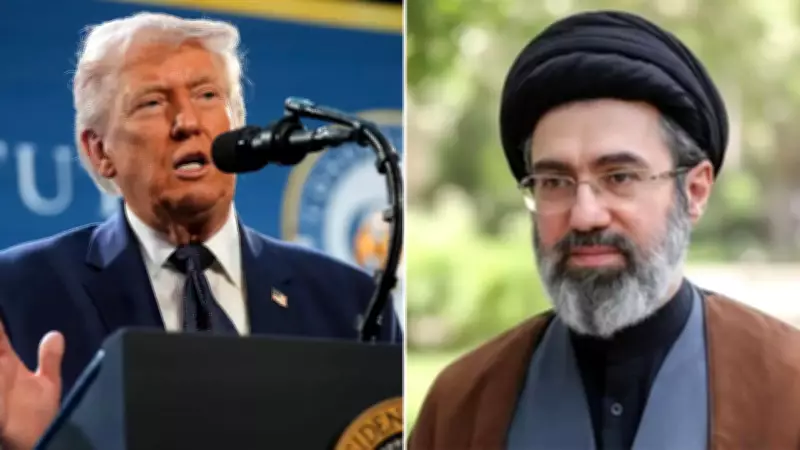
After more than a month of intense military confrontation between the United States under former President Donald Trump and the Tehran regime, Iran's Supreme Leader Mojtaba Khamenei issued a critical directive on Wednesday. He instructed the Islamic Republic's military forces to observe a ceasefire, while delivering a stark warning that this pause does not signify the conclusion of hostilities.
"This is not the end of the war, but all military branches should follow the Supreme Leader's order and cease fire," declared Mojtaba Khamenei, the successor and son of the late leader Ali Khamenei, in an official statement reported by CNN. This announcement underscores the precarious nature of the temporary truce in a region fraught with geopolitical tensions.
Ceasefire Confirmed Amid Trump's Stern Warnings
Iran's Supreme National Security Council has officially confirmed a two-week ceasefire, even as military escalations continue to simmer. This decision came shortly after a sharply worded ultimatum from Donald Trump, who cautioned Iran that "whole civilization will die tonight," reflecting mounting frustration over Tehran's strategic move to close the vital Strait of Hormuz. The waterway is a crucial global oil transit route, and its blockade has heightened international concerns.

Despite agreeing to halt immediate hostilities, Tehran has made it clear that the ceasefire is not a permanent resolution to the conflict. This stance follows sustained military pressure from combined US and Israeli forces, which have been actively engaged in the region. The Iranian government views this pause as a tactical measure rather than a surrender, signaling ongoing defiance in the face of external threats.
Iran's Conditions for a Lasting Peace Agreement
In a detailed proposal aimed at achieving a durable resolution, Iran has laid out a series of non-negotiable conditions that must be met for any lasting peace. These demands include:
- Full financial compensation for reconstruction efforts to repair damages incurred during the conflict.
- The complete lifting of all international sanctions imposed on Iran.
- The release of Iranian funds that have been frozen by the United States.
Additionally, Iran calls for a permanent cessation of hostilities not only within its borders but also across neighboring regions such as Iraq, Lebanon, and Yemen. The proposal emphasizes the reopening of the Strait of Hormuz and guarantees for secure and free navigation to ensure global trade stability.
In a significant concession, Iran has pledged that it will not pursue nuclear weapons, provided these terms are fully met. The government stated that a comprehensive ceasefire across all fronts would take effect immediately upon approval of these conditions, offering a potential pathway to de-escalation.
Background and Rejection of Earlier Proposals
Just a day prior to the ceasefire announcement, Tehran had firmly rejected a proposal from Washington to halt military actions involving the US and Israel. This rejection came despite Trump's explicit warning about the potential destruction of Iran's critical infrastructure, highlighting the regime's resilience and strategic calculations.
The ongoing conflict has drawn global attention, with analysts closely monitoring developments in the Middle East. The ceasefire, while temporary, represents a critical juncture in US-Iran relations, with implications for regional stability and international security dynamics.