

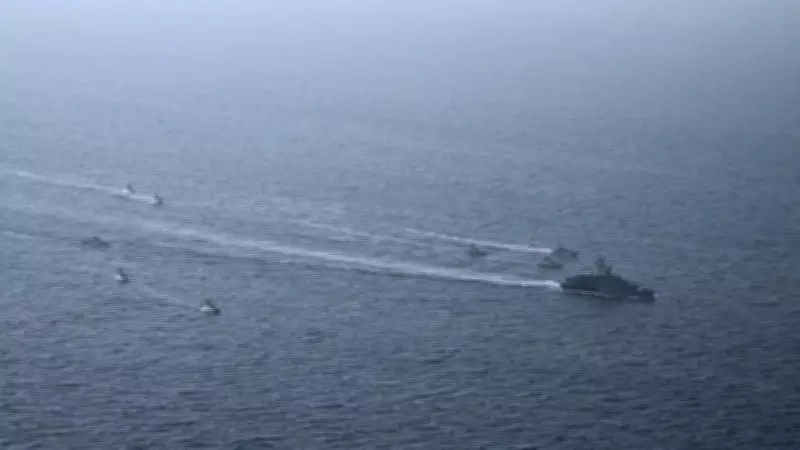
Iran Continues Crude Oil Exports to China Via Strait of Hormuz Despite Escalating Regional Tensions
In a bold move amid heightened military conflict, Iran has successfully shipped millions of barrels of crude oil exclusively to China through the critical Strait of Hormuz. This strategic energy corridor has seen significant disruptions in broader maritime traffic since the outbreak of hostilities between the US-Israel alliance and Iran on February 28. Despite these challenges, Iranian tankers have maintained a steady flow of petroleum to its primary Asian buyer.
Substantial Shipments Tracked Despite Security Threats
According to shipping intelligence reports, between 11.7 and 12 million barrels of Iranian crude have transited the Strait of Hormuz since the conflict began. Samir Madani, co-founder of TankerTrackers, confirmed to CNBC that all these shipments were destined for Chinese ports. TankerTrackers utilizes advanced satellite imagery technology to monitor vessel movements, enabling them to track ships even when onboard tracking systems are deliberately switched off.
"Several vessels have 'gone dark' after Tehran issued warnings about potential attacks on ships attempting to navigate through the strait," Madani explained. This practice of disabling transponders has become increasingly common as security concerns mount in the region.

China Remains Primary Destination Amid Verification Challenges
Nhway Khin Soe, a crude analyst at shipping intelligence firm Kpler, noted that "given that China has been the primary buyer of Iranian crude in recent years, a significant share of these barrels could ultimately head there." However, she emphasized that confirming final destinations has become progressively more difficult due to the opaque nature of these shipments.
Neither Iranian nor Chinese authorities have formally acknowledged these reports or the specific details of the ongoing oil transfers. This silence reflects the sensitive geopolitical nature of energy trade during active military conflict.
Maritime Traffic Declines as Security Concerns Mount
The Strait of Hormuz, a narrow maritime passage handling approximately one-fifth of global oil and gas shipments, has experienced a sharp decline in overall traffic since hostilities escalated last month. Many international tankers are avoiding the route entirely due to legitimate security fears.
According to the International Maritime Organisation, Tehran attacked ten vessels operating in or near the Strait of Hormuz less than two weeks after the conflict began, resulting in at least seven seafarer fatalities. These incidents have created a dangerous environment for commercial shipping.
"Oil tankers navigating the strait must be very careful," cautioned a spokesperson for Iran's Ministry of Foreign Affairs in a recent CNBC interview, acknowledging the heightened risks.
Iranian-Flagged Tankers Dominate Export Movements
Madani further revealed that three of the six tankers observed leaving Iran since February 28 were flying the Iranian flag. This suggests Tehran is utilizing its own maritime assets to maintain critical energy exports despite international pressure and regional instability.
International Reactions and Alternative Export Routes
Amid rising oil prices driven by fears of supply disruptions, former US President Donald Trump urged ships waiting near the strait to resume their passage. In an interview with Fox News, Trump encouraged vessels stranded near the waterway to "show some guts" and move forward, claiming "there's nothing to be afraid of."
Meanwhile, Iran appears to be exploring alternative export routes to reduce dependence on the Strait of Hormuz. While the Kharg Island terminal has historically handled around 90 percent of Iran's crude exports before shipments pass through the strait, Tehran has resumed loading operations at the Jask oil and gas terminal on the Gulf of Oman.
Jask Terminal: A Strategic Alternative with Limitations
Located south of the Strait of Hormuz, Jask represents Iran's only crude export terminal on the Sea of Oman that completely bypasses the strategic choke point. Satellite imagery recently captured an Iranian vessel loading 2 million barrels of crude at this facility—only the fifth such loading recorded there in the past five years.

"The renewed activity suggests Tehran is attempting to diversify its export routes beyond the Strait of Hormuz," analysts noted, though questions remain about the terminal's practical viability.
Madani explained that loading a single Very Large Crude Carrier (VLCC) at Jask can take up to 10 days due to operational inefficiencies, compared to just one to two days at Kharg Island. "It has good domestic propaganda value, but not much in terms of a logistical advantage," he concluded regarding the alternative terminal's capabilities.
This strategic shift in export operations demonstrates Iran's determination to maintain its crucial oil revenue streams despite mounting regional pressures and security challenges affecting one of the world's most vital energy corridors.





