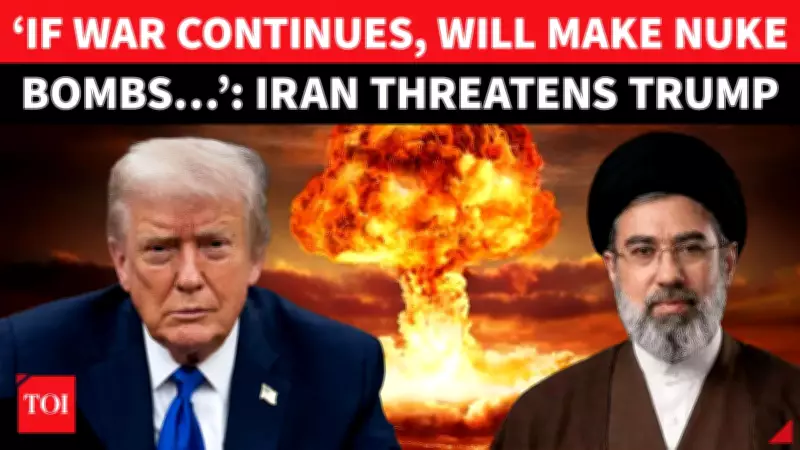
Iran Nuclear Crisis: Hardliners Push for Atomic Weapon After US-Israel Strikes
In a dramatic escalation of Middle East tensions, influential hardliners within Iran's establishment are intensifying calls for the country to develop nuclear weapons following recent military strikes by the United States and Israel. This push represents a potential seismic shift in Tehran's long-standing nuclear policy that could reshape regional security dynamics.
Hardliners Challenge Decades-Old Nuclear Doctrine
According to reports from Reuters, powerful voices within Tehran's political and military circles are now openly questioning Iran's traditional prohibition against nuclear weapons development. This comes despite the fact that Iran has not officially altered its nuclear doctrine following the killing of Supreme Leader Ayatollah Ali Khamenei, who had consistently declared nuclear weapons forbidden under Islamic principles.
For decades, Iran maintained its commitment to the Nuclear Non-Proliferation Treaty under Khamenei's leadership, positioning itself as a responsible nuclear state pursuing only peaceful atomic energy. However, the recent military strikes have created a new political environment where hardline factions see nuclear weapons as essential for national security and deterrence.

Growing Momentum for Treaty Withdrawal
The movement toward nuclear weaponization is gaining significant momentum, with prominent figures like Mohammad Javad Larijani publicly urging a complete reassessment of Iran's international commitments. Larijani and other hardliners are advocating for Iran to withdraw from the Nuclear Non-Proliferation Treaty entirely, arguing that the country needs stronger defensive capabilities in the face of external aggression.
Even state-linked media outlets are joining this chorus. The Tasnim News Agency, which maintains close ties to Iran's Revolutionary Guard Corps, has published editorials advocating for treaty withdrawal and accelerated nuclear weapons development. This represents a notable shift in official messaging that suggests growing institutional support for nuclear weaponization.
Regional and Global Implications
The potential shift in Iran's nuclear policy carries profound implications for regional stability and global non-proliferation efforts. Should Iran pursue nuclear weapons, it would:
- Fundamentally alter the military balance in the Middle East
- Trigger potential arms race responses from neighboring countries
- Undermine decades of international non-proliferation agreements
- Create new challenges for diplomatic engagement and conflict resolution
The situation remains fluid, with traditional moderates within Iran's government reportedly resisting the hardliners' push. However, the combination of external military pressure and internal political dynamics appears to be creating conditions where nuclear weaponization is gaining unprecedented traction as a policy option.
International observers are closely monitoring whether Iran's interim leadership will maintain the country's traditional nuclear restraint or bow to hardline pressure for a more aggressive nuclear posture that could dramatically escalate regional tensions and potentially trigger broader conflict.