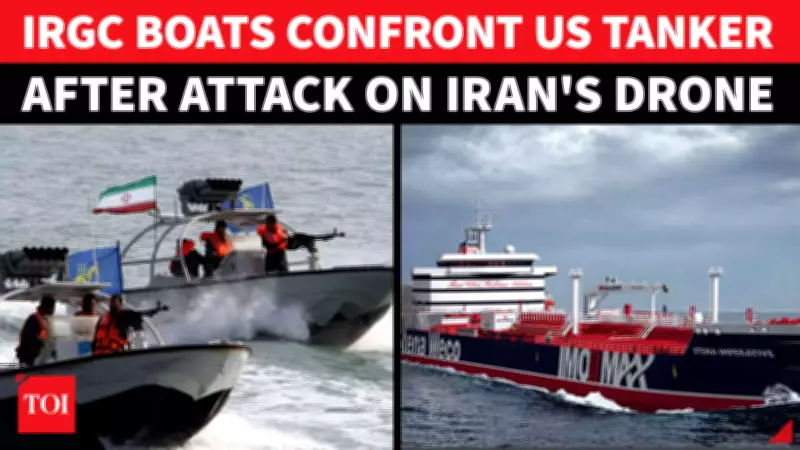
Iranian Gunboats Confront US Oil Tanker in Strait of Hormuz, US Navy Warship Intervenes
Tensions have surged dramatically in the strategically vital Strait of Hormuz following a high-stakes maritime confrontation between Iranian forces and a United States-flagged oil tanker. According to reports from U.S. officials cited by The Wall Street Journal, as many as six armed Iranian Islamic Revolutionary Guard Corps (IRGC) gunboats ordered the commercial vessel to shut down its engines and prepare for boarding in one of the world's most critical maritime chokepoints.
Conflicting Narratives Emerge from Washington and Tehran
The incident has sparked competing versions of events from the two adversarial nations. U.S. Central Command stated that IRGC boats, accompanied by an Iranian Mohajer drone, approached the tanker M/V Stena Imperative at high speed and issued threats to board it. In response, the tanker accelerated away from the scene, prompting the rapid deployment of a U.S. Navy guided-missile destroyer which intervened to escort the vessel to safety.
British maritime authorities have confirmed an incident occurring north of Oman, adding international verification to the escalating situation. Conversely, Iranian officials have presented an alternative account, claiming the tanker briefly entered Iranian territorial waters and departed peacefully after receiving standard warnings, downplaying the severity of the encounter.

Broader Geopolitical Context and Regional Implications
This maritime standoff occurs against a backdrop of intensifying geopolitical friction. Iran's naval leadership has recently issued warnings that it could move to block the Strait of Hormuz entirely if the nation comes under attack. Such action would have catastrophic consequences for global oil markets, as approximately one-fifth of the world's petroleum passes through this narrow waterway.
Simultaneously, the administration of U.S. President Donald Trump has been ramping up military pressure on Tehran while simultaneously pushing for renewed negotiations over Iran's nuclear program. This dual approach has created a volatile environment where diplomatic overtures coincide with shows of military force, increasing the risk of miscalculation.
Strategic Importance of the Strait of Hormuz
The Strait of Hormuz represents one of the planet's most significant maritime bottlenecks, serving as the only sea passage from the Persian Gulf to the open ocean. Its closure would disrupt global energy supplies, trigger economic shockwaves, and potentially escalate into broader regional conflict. Previous incidents in these waters have led to increased naval deployments and heightened alert status among international shipping companies.
This latest confrontation underscores the fragile security situation in the region and highlights how quickly routine maritime transit can transform into an international crisis when geopolitical tensions run high between major powers.