

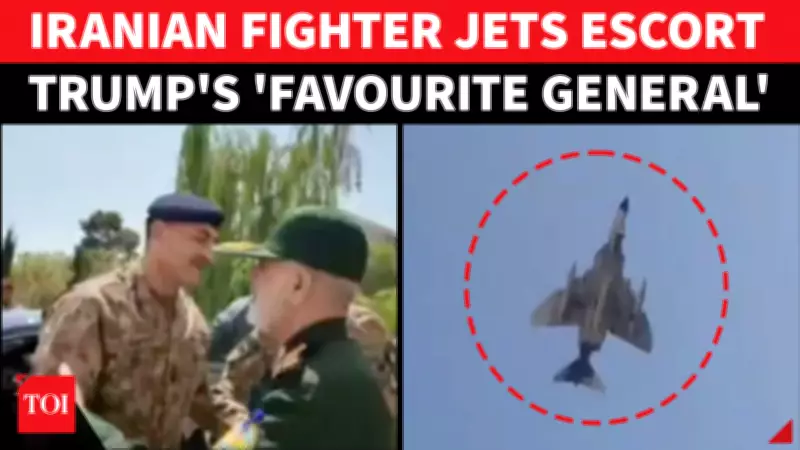
Iran Deploys Fighter Jets to Escort Pakistan Army Chief, Defying Military Damage Claims
In a bold demonstration of aerial readiness, Iran has deployed a significant number of its fighter jets to escort the aircraft of Pakistan's Army Chief during a high-profile visit to Tehran. This move comes as Iran issues a strong statement rejecting claims that its Air Force has been destroyed, asserting its continued operational capability despite ongoing conflict narratives and heightened regional tensions.
Escort Operation Highlights Control and Readiness
Iranian officials cited the visit on Wednesday, stating that upon entering Iranian airspace, support from Pakistani aircraft was deemed unnecessary. Instead, Iran took charge by deploying its own fighter jets to escort the visiting delegation. This action is portrayed as a clear demonstration of Iran's control over its airspace and its military preparedness, countering external reports that have suggested only partial damage rather than total collapse of its Air Force.
Context of Regional Tensions and Conflicting Assessments
The remarks from Iran emerge amid a backdrop of escalating regional tensions, with conflicting assessments regarding the country's military strength. Some external reports have indicated that Iran's Air Force may have sustained partial damage, but Iran firmly denies any such destruction, using the escort operation as evidence of its resilience. This incident underscores the complex dynamics in the region, where military posturing and diplomatic gestures often intersect.

Implications for International Relations
By escorting the Pakistan Army Chief's aircraft, Iran sends a message not only to regional actors but also to global powers, including the United States. The move is seen as a strategic assertion of sovereignty and capability, potentially influencing ongoing narratives about Iran's military status and its role in regional security. As tensions persist, such demonstrations are likely to shape future diplomatic and military interactions in the Middle East.






