

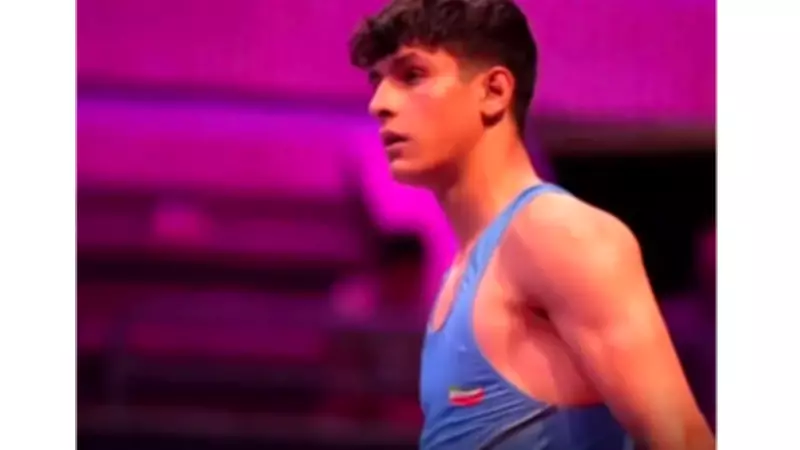
Iran Executes Teen Wrestling Champion Saleh Mohammadi Amid Global Outrage
Saleh Mohammadi, a 19-year-old wrestling champion, was executed by Iranian authorities in Qom, ending the life of a young athlete who once dreamed of representing his country on the global stage. His death has ignited widespread international condemnation, with human rights groups decrying the flawed judicial process that led to his execution.
From Wrestling Dreams to Gallows
Mohammadi was widely recognized as a talented freestyle wrestler who had competed in domestic tournaments and earned recognition in international competitions. Images circulating after his execution showed a disciplined teenager celebrating victories in national colors, a stark contrast to the accusations that defined his final weeks. His arrest occurred in January 2026 during protests in Qom, part of broader unrest that began in late 2025 over economic grievances and evolved into anti-regime dissent.
The Charge: 'Enmity Against God'
Authorities accused Mohammadi of moharebeh, or "enmity against God," a severe charge under Iranian law historically used for armed rebellion but increasingly applied in protest-related cases. Prosecutors alleged that he and two others, Mehdi Ghasemi and Saeed Davoudi, killed security forces during clashes in Qom, framing their actions as violent insurrection rather than protest. Critics argue this broad interpretation blurs the line between dissent and rebellion, enabling capital punishment in politically sensitive cases.

Flawed Trial and Allegations of Coercion
Human rights organizations, including Amnesty International, have strongly disputed the official narrative, reporting serious due process violations. Mohammadi was allegedly denied access to a chosen lawyer, held incommunicado, and subjected to coercion. In court, he reportedly retracted confessions extracted under torture, but these claims were dismissed without proper investigation. The trial was described as swift and opaque, falling short of international legal standards.
Failed Last-Minute Appeals
In the weeks before the execution, human rights groups issued urgent appeals to halt the sentence, while activists and the Iranian diaspora amplified Mohammadi's case on social media. Despite calls to prominent sporting figures and organizations, no large-scale international intervention materialized, unlike the campaign for wrestler Navid Afkari in 2020. The execution proceeded, highlighting the limited impact of such last-minute efforts.
Wider Crackdown on Dissent
Mohammadi's execution is part of a broader crackdown in Iran since late 2025, with thousands reportedly killed or detained amid sustained unrest. Independent observers warn of a sharp rise in executions linked to protest activity, with charges like moharebeh used to frame dissent as an existential threat. Hundreds of detainees remain on death row, raising fears that more cases could follow.
Echoes of Navid Afkari and Sporting Silence
The case draws inevitable comparisons to Navid Afkari, another Iranian wrestler executed in 2020 after protests. Mohammadi's death signals little change, with athletes targeted as national symbols to amplify international attention while deepening domestic fear. It has reignited debate over the role of global sporting bodies in responding to human rights concerns, with activists urging against silence that normalizes such actions.
A Symbolic Loss
Saleh Mohammadi's life and death transcend mere statistics. As a teenager chasing athletic dreams, his execution serves as a grim reminder of Iran's harsh penalties for dissent. For many observers, the pressing question is no longer what happened to him, but how many more could face similar fates in the ongoing crackdown.






