

Iran Confirms Death of Top Security Official in Israeli Airstrike, Vows Retaliation
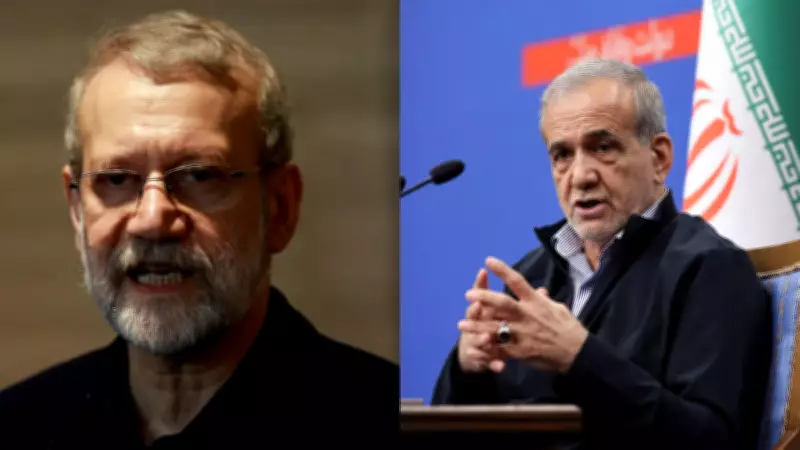
Iran officially confirmed on Tuesday the death of its Supreme National Security Council secretary, Ali Larijani, hours after Israel claimed responsibility for eliminating him in a targeted airstrike. The confirmation came alongside Iran's president mourning the loss while issuing a stark vow of revenge against Israel.
Iran's Official Statement and Presidential Condolences
The Iranian Supreme National Security Council released an official statement, quoted by AFP, declaring: "The pure souls of the martyrs embraced the purified soul of God's righteous servant, Martyr Dr. Ali Larijani." The statement further elaborated that Larijani had "after a lifetime of struggle for the advancement of Iran and of the Islamic Revolution, he ultimately attained his long-held aspiration, answered the divine call, and honourably achieved the sweet grace of martyrdom in the trench of service."
Iranian President Masoud Pezeshkian issued a formal statement of condolence, describing Larijani's absence as "bitter and upsetting" while praising his decades of dedicated service to the Iranian government. According to reports from the New York Times, Pezeshkian emphasized that Iran would "continue the path of defiance and resistance" and explicitly vowed to "avenge his blood," signaling a clear escalation in regional tensions.

Israel's Claim of Responsibility and Netanyahu's Address
Israel had earlier claimed responsibility for the airstrike that killed Ali Larijani. Israeli Defense Minister Israel Katz stated that both Ali Larijani and Gen. Gholam Reza Soleimani, the head of the Revolutionary Guard's Basij force, were "eliminated last night." This represents a significant dual blow to Iran's security apparatus.
In a televised national address, Israeli Prime Minister Benjamin Netanyahu described Ali Larijani as "the boss of the Revolutionary Guards, which is the gang of gangsters that actually runs Iran." Netanyahu expressed a long-term strategic view, suggesting the Iranian people might eventually overthrow their leadership, but cautioned: "It will not happen all at once, it will not happen easily. But if we persist in this -- we will give them a chance to take their fate into their own hands."
Military Strikes and Funeral Arrangements
The Israeli military confirmed additional strikes against Basij positions around Tehran following the announcement of the commanders' deaths. This indicates a broader military operation targeting Iran's paramilitary infrastructure.
According to reports from Iranian news agencies Fars and Tasnim, quoted by AFP, funeral services for both Ali Larijani and Gholamreza Soleimani are scheduled for Wednesday morning in central Tehran. These ceremonies are expected to draw large crowds and could serve as a platform for further anti-Israeli rhetoric and mobilization.
Broader Context of Escalating Conflict
This incident marks a serious escalation in the ongoing shadow war between Israel and Iran. The targeted killing of such a high-ranking security official and a senior military commander represents a bold and provocative move by Israel, likely calculated to degrade Iran's operational capabilities. Iran's vow of revenge sets the stage for potential retaliatory actions, which could range from cyber-attacks and proxy militia strikes to more direct military confrontations, further destabilizing an already volatile Middle East region.
The international community watches with concern as these developments unfold, with the potential for the conflict to draw in other regional actors and global powers. The deaths of Larijani and Soleimani are not isolated events but pivotal moments in a protracted geopolitical struggle with far-reaching implications for global security and diplomacy.






