

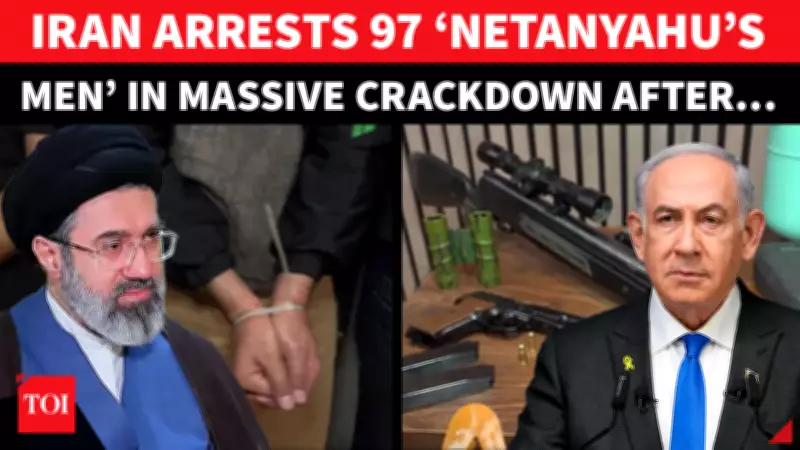
Iran Launches Sweeping Espionage Crackdown, Arrests 97 Suspects Linked to Israel
Iran has initiated a massive nationwide counter-intelligence operation, resulting in the arrest of 97 individuals accused of working as "soldiers of Israel." This crackdown comes amid escalating tensions with the United States and Israel, marking a significant internal security push by Iranian authorities.
Details of the Major Counter-Intelligence Operation
According to Iran's intelligence ministry, the detained suspects are alleged to have been involved in espionage activities on behalf of Israel. The operation is described as a broad sweep targeting foreign adversaries, with authorities emphasizing its nationwide scope. The arrests highlight Iran's intensified efforts to root out perceived threats from within its borders.
Additional Arrests in Alborz Province and Military Espionage Cases
In a related development, 41 more people were detained in Alborz province for allegedly sharing videos and information with foreign-based opposition media. This suggests the crackdown extends beyond direct espionage to include media collaboration deemed hostile by the regime.

Furthermore, Iran's Revolutionary Guard intelligence unit has reportedly arrested 33 additional suspects accused of gathering sensitive military information. These arrests point to a focus on protecting national security assets and preventing leaks of critical defense data.
Context of Regional Tensions and Internal Security Measures
The espionage crackdown occurs against a backdrop of ongoing conflicts involving Iran, the United States, and Israel. Iranian officials have framed the operation as a necessary response to external threats, aiming to bolster internal stability. The scale of the arrests indicates a coordinated effort across multiple provinces and security agencies.
This development underscores Iran's proactive stance in countering foreign influence, with implications for regional dynamics and international relations. The government's actions reflect a hardening position as it navigates complex geopolitical challenges.






