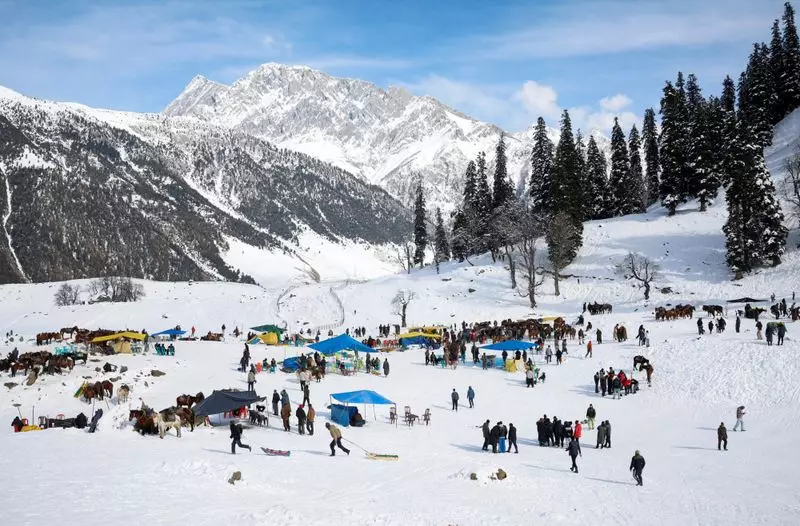
A fierce cold wave has intensified across the Kashmir Valley, bringing life to a standstill and transforming its picturesque landscapes into frozen vistas. The region is witnessing one of the coldest periods of the season, with temperatures plunging several degrees below the freezing point.
Mercury Plummets Across the Valley
The meteorological conditions took a sharp turn for the worse, with Srinagar, the summer capital of Jammu and Kashmir, recording a bone-chilling low of minus 4.4 degrees Celsius. This represents a significant drop from previous nights, indicating the deepening cold spell. The famous tourist destination of Pahalgam was even colder, shivering at minus 5.4 degrees Celsius.
Other parts of the valley reported similarly frigid conditions. Qazigund recorded a minimum of minus 3.8°C, while Kokernag and Kupwara registered lows of minus 2.8°C and minus 4.0°C respectively. The cold is not just limited to the night; daytime temperatures have also remained significantly low, offering little respite to residents.

Water Bodies Succumb to the Freeze
The most visible impact of the intense cold is the freezing of several prominent water bodies. The iconic Dal Lake in Srinagar has seen its edges and some interior portions solidify into a sheet of ice. This phenomenon has severely hampered the movement of shikaras and local boat traffic, affecting the livelihood of many who depend on the lake.
Reports confirm that the freezing is not isolated to Dal Lake. The fringes of other lakes and water streams across the valley have also begun to freeze over. This rapid freezing poses challenges for aquatic life and local communities reliant on these water sources for daily activities.
Life and Livelihoods Disrupted
The severe cold wave has profoundly disrupted daily life. Residents are grappling with a multitude of issues:
- Frozen Water Supply: The most immediate problem for households is the freezing of water pipelines and taps, leading to acute water shortages.
- Health Concerns: Hospitals and clinics are seeing a rise in patients suffering from cold-related ailments like flu, pneumonia, and respiratory issues.
- Agricultural Impact: Horticulture and agriculture, the backbone of the local economy, face a threat from the frost, which can damage crops like apples and saffron.
- Transport Snarls: While the Jammu-Srinagar national highway remains open for now, the icy conditions on local roads make commuting hazardous.
Authorities have issued advisories urging people, especially the elderly and children, to stay indoors during the early morning and late evening hours. The demand for essential winter supplies like heaters, warm clothing, and fuel has skyrocketed. The local administration is on alert, monitoring the situation closely as the weather office predicts the cold conditions to persist for the next few days.
This intense cold spell serves as a stark reminder of the harsh winter realities in the Himalayan region, testing the resilience of its people and infrastructure. The focus now is on ensuring minimal disruption and providing necessary support to vulnerable populations until the temperatures moderate.