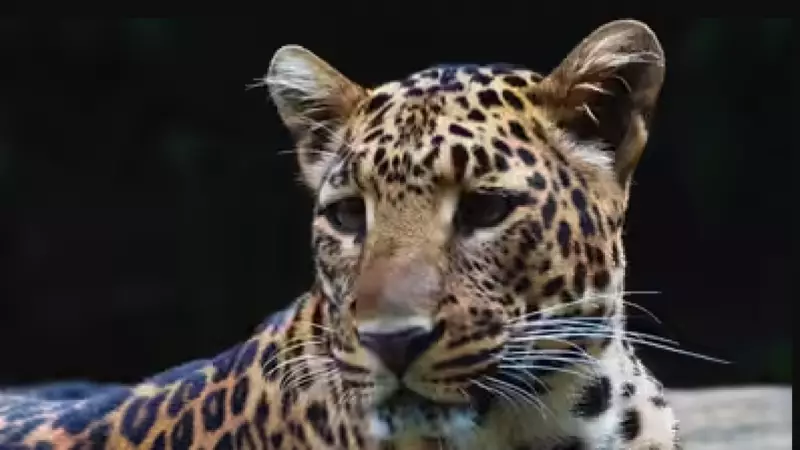
In a daring and high-risk operation, a senior forest official in Chhattisgarh personally subdued an injured leopard with a rope net after modern technology failed, saving the big cat and potentially averting a threat to a nearby village. The incident occurred in the Udanti-Sitanadi Tiger Reserve, highlighting both the courage of frontline staff and the persistent challenges of poaching and staff shortages.
The Alert and the Failed Drone Attempt
On Thursday afternoon, around 2 pm, forest authorities received a critical alert from Kokodi village located in the Torenga buffer zone of the reserve. A leopard was spotted sitting barely a short distance from human habitation, concealed within thick undergrowth. Assistant Conservator and nodal officer of the anti-poaching team, SDO Gopal Kashyap, immediately rushed to the location.
He summoned a drone and the anti-poaching unit to assess the situation. The drone footage revealed a deep, serious wound on the leopard's neck, confirming it was severely injured. This raised immediate concerns that the animal, in pain and struggling to hunt its natural prey, might turn its attention to villagers or children for an easy target. However, the very density of the bushes that hid the leopard also made it impossible for the drone to be used effectively to facilitate a safe capture.

A Daring Hands-On Rescue Before Dark
With the specialized Jungle Safari rescue team still hours away from their base, located 170 km from the spot, time was running out. SDO Kashyap made a bold decision to act before darkness fell, which would have complicated the rescue exponentially. Disregarding personal safety, he went in alone with a rope net, approached the crouching leopard, threw the net over it, and pinned it down, all while the agitated animal attacked him during the struggle.
Local villagers and other forest staff then quickly moved in to help secure the now-netured leopard into a cage mounted on the 'Gajraj' rescue vehicle. The animal was transported away from the habitation to the Taurenga rest house for initial safekeeping.
Treatment, Recovery, and a Wider Crackdown
Later that evening, around 8 pm, veterinarian Dr. Jai Kishore Jharia from Jungle Safari, along with his assistant Ramakant and their team, reached Taurenga. They sedated the leopard and conducted a medical examination. They removed two clutch wire snares that had been cruelly embedded around the animal's neck for nearly seven days. The leopard was given a drip and other necessary treatments. Officials confirmed the animal had already killed a dog in the village, likely due to the pain and breathing difficulties caused by the snares.
By 4 am, the leopard was transported safely to the Jungle Safari hospital. Its condition is now reported as stable, and it will be released back into the Udanti forests once it makes a full recovery.
In response to this incident, forest authorities have registered a wildlife offence case and launched an intensive search for the poachers. They are employing dog squads, spy cameras, and confidential informants. The department has also announced a secret reward of Rs 5,000 to Rs 10,000 for information leading to the arrest of those setting such snares, publicizing the mobile number of USTR deputy director Varun Jain (7568127875) for tip-offs.
This rescue is set against a backdrop of intensified anti-poaching actions. In just the last seven days, 19 poachers have been arrested in related cases involving sambhar deer poaching, illegal captivity of peacocks, and setting forest fires. Over the past three years, more than 500 poachers, smugglers, and encroachers have been taken into custody, with about 750 hectares of encroached forest land being freed.
Officials pointed out the severe operational constraints, noting that the Udanti-Sitanadi Tiger Reserve is functioning with only about 35% of its sanctioned staff and faces a vehicle shortage. Despite this, anti-poaching teams remain active in vulnerable areas. The department has also indicated that bulldozers will be deployed against fresh encroachments in zones prone to poaching.

Forest authorities credited the success of this high-risk mission to the collective effort of SDO Gopal Kashyap, Dr. Jharia and his medical team, SDOs Jagdish Prasad Darro and Bhopal Singh Rajput, various rangers, the drone and dog squad teams, Gajraj vehicle staff, and the alert local villagers of Kokodi.